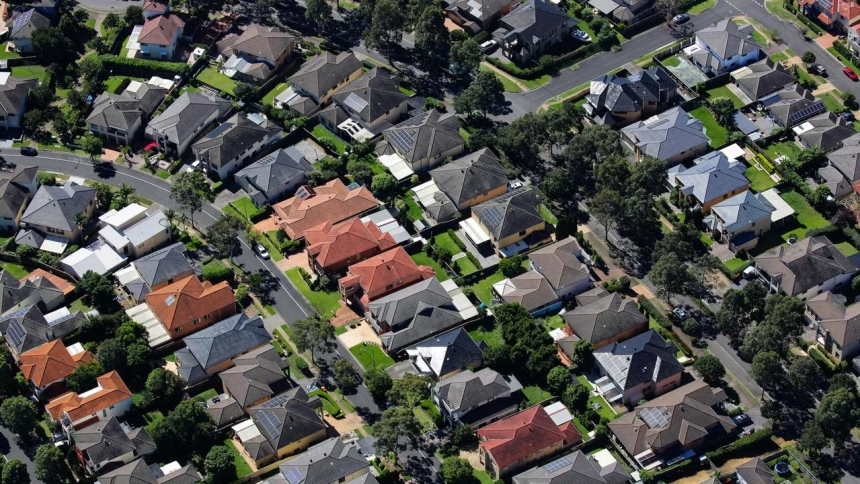
Affordability seems set to be a major theme of 2026.
With interest rates tipped to stay on hold and government incentives playing a part in the purchasing power of first homebuyers, property experts say suburbs where the Australian dream is within reach will likely have the best price growth.
THE HOUSING MARKET IN 2025
Australia’s property market in 2025 was a year of upheaval.
After limping out of 2024 under the weight of high interest rates and buyer fatigue, the market flipped sharply once rate cuts finally arrived in February.
MORE: ‘Insane’: What your home will cost in 2030
MORE: ‘Ghosts’: Unsold mansions in Aus exposed
After rates were cut, confidence surged, borrowing power rebounded and prices reignited across capital cities, with Adelaide, Brisbane and Perth leading the charge.
In many areas, suburb price records fell in rapid succession as cashed-up buyers piled back in.
Housing supply shortages defined the market. New housing completions lagged badly behind population growth, turbocharged by relentless migration, pushing rents to fresh highs and encouraging more investors back into the market. Unit demand roared back as affordability pressures shut many buyers out of detached homes.
2026 TO SEE MODEST GROWTH
Ray White senior data analyst Atom Go Tian says if interest rates don’t go down it’s likely that price growth will start to slow nationally over the first half of the year.
MORE: Feature homes must have in 2026 to be ‘luxury’
“In the last three years we’ve seen double digit growth nationally and for a lot of the major cities,” he says. “But these major cities are reaching price thresholds – and with interest rate cuts looking unlikely in the next six months, the forecast is that this growth will slow down.”
Ray White is forecasting single digit price growth over the first half of 2026.
McGrath Estate Agents CEO John McGrath says we could be in for price growth if interest rates do eventually come down.
“As global economic and political uncertainty stabilises over the next 12 months, I think demand will escalate and prices will rise but perhaps not until we get another much-awaited interest rate cut or two,” he says. “Interest rates are hard to read. The experts were all predicting further rate reductions but that view seems to have softened with some even predicting a rate rise.
MORE: Suburbs tipped for price surges when RBA rates rise
“I think we will see rates lower by the end of the year but it may be slightly slower than originally predicted.”
In the meantime, the forecast is fairly conservative.
“I believe the market will see prices stabilise with modest growth in some markets,” McGrath says.
AFFORDABILITY SQUEEZE
L.J. Hooker head of research Mathew Tiller says more affordable areas are likely to have stronger growth next year.
“Given the affordability squeeze, I think in terms of location we’ll see more activity in the outer suburbs and regional hubs,” he says. “In terms of property type, looking at apartments, townhouses and duplexes instead of large, detached homes, is probably a trend for next year as well.”
Go Tian says suburbs where prices fall under the property price caps set out in the Australian Government 5% Deposit Scheme are likely to see higher demand from first homebuyers.
“We will see suburbs likely to grow and approach this cap,” he says. “Then once they reach this cap, it’s likely buyers will look elsewhere to areas that fit within the cap.”
Data from Ray White’s sister company Loan Market shows lending to first homebuyers has doubled over the last quarter compared to the same time last year, he says.
“Demand is increasing,” he says. “That’s driven by limited supply and by the expanded 5 per cent deposit scheme.”
MORE: How you can make $3000 a week on the side
INVESTOR ACTIVITY
He says regional Australia could experience a “fourth phase” of investor activity in 2026 after already seeing three phases of growth within the past 10 years. While the first pre-pandemic phase was centred around “satellite cites” that weren’t too far from the capitals, the second occurred during Covid and was driven by a “national lifestyle migration.” More recently, the third wave of regional investment has seen industry specific towns start to boom.
“The next frontier of investment in regional Australia will be driven by towns who are able to combine this industry and lifestyle aspect,” he says.
MORE: Tradie’s $5m at 21, buys 3yo $370k home
RENTAL GROWTH
With demand still higher than supply in many places, rents are likely to rise in 2026, says McGrath.
“The rental market should have another good year with rents likely to increase by another 5 per cent or more in most metropolitan markets,” he says. “As new developments start to come out of the ground this will somewhat alleviate the situation in 2027 but unfortunately for renters there’ll be no relief in 2026.”
Tiller says a lack of new construction coupled with sustained demand will see rents grow in regional areas.
“It’s going to keep regional markets very tight until we do see a substantial increase in supply and construction activity in our regions,” he says.
NSW has quarter of Australia’s top 100 boom suburbs
Originally published as Australia’s property market set for slowdown but affordable suburbs predicted to boom