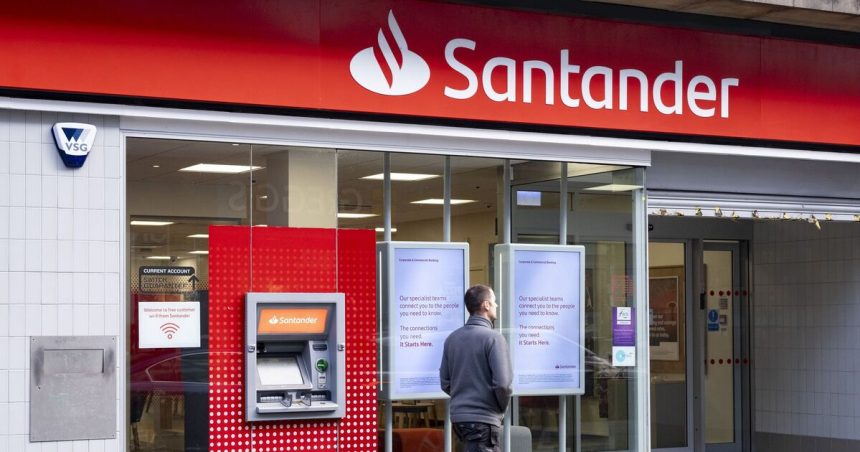
People taking out a new mortgage have been hit with another sharp rise in borrowing costs after Santander pushed through its third rate hike in just 10 days.
The latest increase of up to 0.30 percentage points comes days after a 0.35 percentage point rise earlier in the week. Once all three increases are taken into account, some new deals are now 0.9 percentage points more expensive. On a typical £250,000 repayment mortgage over 25 years, that equates to roughly £127 extra a month compared with rates just days ago.
The changes, due to take effect from Friday, apply across new business – including first-time buyers, home-movers, remortgagers switching lender and buy-to-let landlords.
Existing customers already on a mortgage deal are not affected unless they are taking a new deal, although those switching within Santander’s own range will see smaller increases of up to 0.19%.
Mortgage brokers say the speed and scale of increases show lenders are becoming increasingly nervous.
Rohit Kohli, director at The Mortgage Stop, said: “Santander has now delivered a hat-trick of hikes in about 10 days, and that will leave many borrowers wondering what on earth is going on. The concern is not just the direction of travel, but the speed of it.”
He warned that ongoing tensions in the Middle East are unsettling financial markets and feeding into higher mortgage pricing.
Shaun Sturgess, director at Sturgess Mortgage Solutions, told Newspage: “Santander only increased its rates on Tuesday by up to 0.35% so to see further chunky increases from the same lender tells you all you need to know about where mortgage rates are headed. And that, based on this evidence, is up.
“Aspiring buyers and those due to remortgage in the next six months or so need to lock into a rate as soon as possible, as lenders have got the heebie-jeebies and are hiking fast.”
Why rates are rising again
Markets have been rattled by geopolitical tensions and fears that inflation could remain higher for longer. That has pushed up swap rates – the key pricing mechanism lenders use to set fixed mortgage deals – forcing banks to reprice quickly.
There are also growing expectations the Bank of England could hold rates higher for longer, and potentially even raise them again in 2026. David Stirling, at Mint Wealth, said: “Three rate hikes from Santander in ten days is a signal of a market in distress. Swap rates have moved fast and lenders are repricing just to keep up. The sub-4% era is over for now.”
Other lenders also moving
Santander is not acting in isolation. Across the market, lenders have been repricing at pace in recent days. Major high street banks and building societies have been increasing fixed rates, particularly on 2-year deals; withdrawing cheaper products at short notice; and relaunching new ranges at higher pricing.
Brokers say some lenders have updated deals multiple times in a matter of days as they try to keep up with volatile markets. Aaron Strutt of Trinity Financial said: “Santander’s latest rates only went live yesterday, and they are already being pulled on Friday.”
He added that even tracker rates – which usually move more slowly – are rising, calling it “quite an unusual move”.
Justin Moy, of EHF Mortgages, said: “It is inevitable that Santander joined the rest of the High Street lenders in its frequent rate increases over the last week or so, as the Middle East conflict reverses all the good progress made over the last 6 months, in just 3 weeks.”
‘Lock in now’ warning
With rates rising quickly, brokers are urging those taking out a new mortgage or lining one up not to delay. Adam Stiles, managing director at Helix Financial Partners, said: “More mortgage mayhem with Santander increasing by a not insignificant amount, following on from a raft of other lenders in recent weeks.”
He added: “Get your rates locked in now if you are in the mortgage process. If rates come back down… your mortgage broker should be able to secure the lower rate. Locking in now prevents it going higher.”
Samuel Mather-Holgate, at Mather and Murray Financial, said: “A lender like Santander increasing its rates twice in a week sends an ominous message to borrowers.”