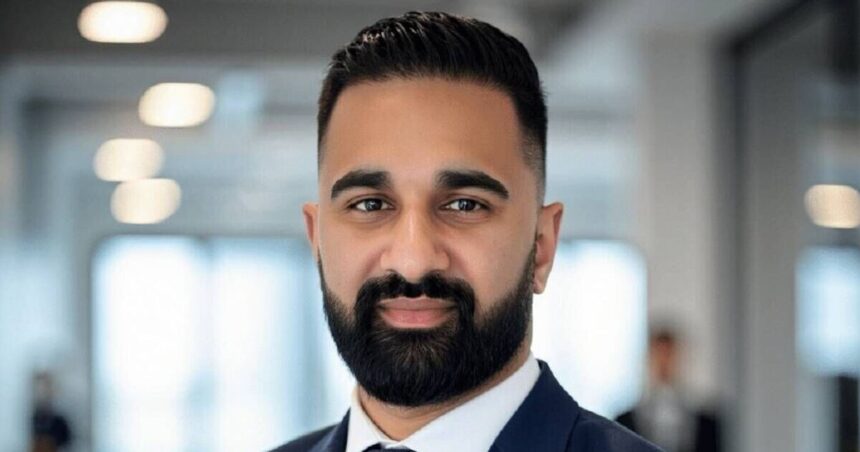

Gaurav Shukla (Image: Newspage)
Once upon a time, you’d need to work in banking to earn a six-figure salary in your 20s or 30s, but these days content creation, whether through YouTube, TikTok or Instagram, is a rapidly growing industry. A growing number of Brits are making a decent — and in some cases spectacular — income.
Experts say content creators often believe they won’t be eligible for a mortgage because lenders won’t understand what they do — or haven’t moved with the times. But one broker has reassured that they are just as likely to get a mortgage as any other self-employed mortgage applicants, as lenders have moved with the times — and treat content creators in exactly the same way.
“A lot of content creators approach me fully expecting to be told that no lender will take what they do seriously,” said Gaurav Shukla, CEO at Marlow-based Home Me Mortgages. “They’re taken aback when I say lenders will look at them through the exact same lens that they do other people who are self-employed.”
Gaurav said lenders were less concerned about how people make an income than the income itself, in particular how robust and consistent it is.
He continued: “What a lender wants to see with anyone who is self-employed, whether they’re a plumber, electrician or YouTuber, is consistency of earnings usually backed up by tax calculations and one to two years of accounts. What you do for a living isn’t irrelevant, of course, but if the numbers work then the mortgage will generally work, too. If you can prove you are making a solid income, your mortgage application is as solid as any other.

Content creators are self-employed people at the end of the day (Image: Jose Luis Raota via Getty Images)
“As with any self-employed applicant, the main challenge content creators will face is income consistency, as sponsorships, ad revenue and platform payouts can fluctuate. But if they have a strong track record and consistent earnings, for many lenders that will be enough.”
Where content creators need to be realistic, Gaurav added, is expecting lenders to factor in future brand deals and revenue opportunities — although it’s something that will still be entertained by some.
He continued: “Many influencers want lenders to consider upcoming brand deals or promotional contracts to increase their borrowing power. While not all lenders will do this, some specialist lenders may take future committed income into account, particularly where there’s a strong track record of earnings. In that regard, it’s similar to how certain lenders assess actors using contracted future earnings.”
Gaurav added that many people who were creating content in their spare time and monetising it, which is how professional content creators often start out, were often not aware that they may already be able to borrow more.
He said: “If social media income is being earned alongside a regular job, many lenders will 100% consider that, at least assuming it’s sustainable and evidenced. The extra revenue could result in a slightly bigger loan that could get you the property you thought you couldn’t afford.”
As ever, Gaurav said that the key for content creators was to know which lenders were most likely to look favourably on them.
He added: “Some lenders have a very weak appetite for the self-employed generally, as they’re more risk-averse, but others welcome them with open arms. The key is knowing where to look and how to present the case. We’ve dealt with a number of content creators who have tried a few high street names and then given up, having been rejected. But they’re over the moon when we say they’ve simply been looking in the wrong place.”