Historically, Long Island City was a thriving manufacturing hub populated by low-rise factories and bakeries providing goods to Manhattan and the wider New York City area.
But in the early 2000s, the tectonic plates shifted. The area was re-zoned and many of the factories razed as developers bought up slabs of land to build gleaming new residential and office towers on.
Today, Long Island City is one of New York City’s fastest-growing neighbourhoods and home to a thriving art community. It was also almost home to Amazon’s behemoth 1m sq ft East Coast ‘HQ2’, but the deal fell through in 2019 following a dispute over local authority subsidies.
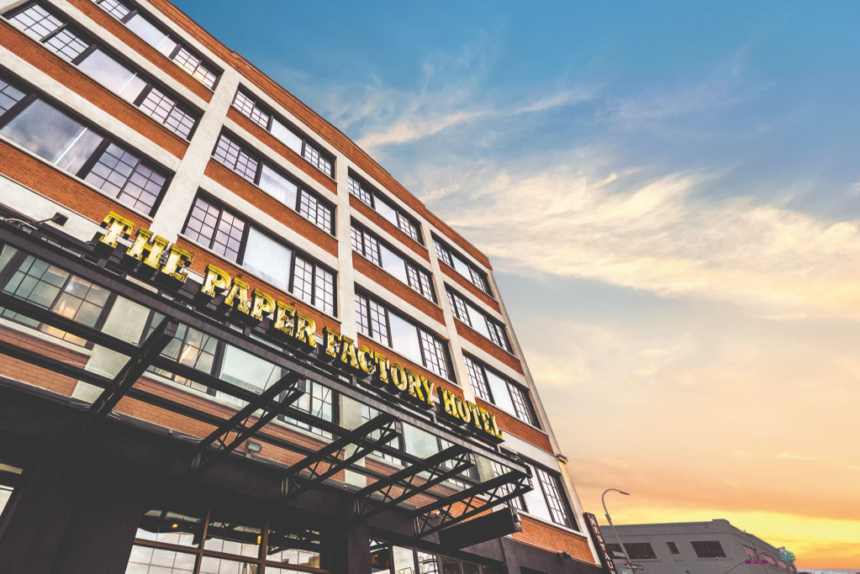
Where Amazon failed, another company succeeded. In November, The Collective opened The Collective Paper Factory in Long Island City, marking not just its first US scheme but also the global debut of its new short-stay model.
Three other sites in New York City are currently in development and slated for opening in 2022, including what will be its US flagship at 555 Broadway in Williamsburg, Brooklyn. The Collective has also snapped up sites in Chicago and Miami.
Its US and global expansion aspirations don’t end there, as Property Week found out when it took a whistle-stop tour of the The Collective’s New York City sites and spoke to charismatic chief executive and founder Reza Merchant, head of US development Simon Koster and global planning and communications director James Penfold.
The Collective was set up by Merchant in 2010, initially as a residential rental agency, but Merchant soon spotted not so much a gap as an entirely new market in the form of the then non-existent co-living sector.
You have to understand the nuances of the local culture
Reza Merchant, The Collective
Having spent the first half of the 2010s building proof of concept, The Collective opened its first co-living scheme, Old Oak, in 2016, and its second, at Canary Wharf, last year.
Over the past couple of years, it has turned its attention to global expansion. In the past 12 months, The Collective has received planning permission for a number of schemes in London in locations such as Stratford, Westbourne Park and Earlsfield, taking its total number of sites in the capital to nine. Last year, it launched COLIV – the world’s first co-living fund – in partnership with DTZ Investors, with the aim of raising up to £650m to deliver six to 10 co-living assets in London.
The Collective also made its first forays into Ireland and Germany, with acquisitions in Dublin and Berlin, and last month, it agreed a new £140m financing package with Deutsche Bank and GCP Asset Backed Income Fund to fuel its global expansion, taking the total funding raised to more than $1bn (£780m).
Today, The Collective boasts a £2.6bn portfolio spanning 3.9m sq ft once developed out, and the goal is to have opened 100,000 co-living units by 2025.
A good proportion of these are likely to be delivered in the US, where the huge scale of the market offers greater growth potential. In order to tap that potential, Merchant quickly realised he needed to recruit people with local knowledge.
“People try [to do things] in London where they just parachute in a bunch of people from their own country and it rarely works well, you have to understand the nuances of the local culture.”
Key appointment
Cue the appointment last year of Koster, who had previously worked at US real estate company JDS, where he delivered a wide range of residential, hospitality and mixed-use projects in New York City and Miami, including the colossal 1,428 ft residential scheme 111 West 57th Street.
“Simon delivered the tallest residential building in the western hemisphere here in New York [at 111 West 57th Street], so he knows what he’s doing,” says Penfold. “He brings a great deal of experience, energy and passion and the [US] team is just going from strength to strength.”
The US team’s greatest achievement so far is the Paper Factory. Penfold says the 100-year-old former paper and radio factory enabled The Collective to put a “stake in the ground in the US and gives us a building to showcase”.
Merchant adds: “It was a great opportunity to build an operational presence in the US and really is a stunning space in terms of the bones of the building and the common spaces. I think our cultural programme and activation will be amazing there.”
Visitors can stay from one to 29 nights in the Paper Factory’s 125 rooms. The Collective also plans to build more than 100 traditional co-living spaces above the hotel offering a longer-stay option.
As well as currently being short-stay only, the Paper Factory differs from other projects the company is currently delivering in the US because it is an ‘adaptive reuse’ scheme as opposed to the ground-up developments it is planning in other locations.
Closely aligned
However, it is very closely aligned, says Koster. “In terms of the core values of who we are, how we operate a building, what kind of members we’re appealing to, how we engage with the community – all of those things have nothing to do with what the building looks like,” he says. “How we do things [elsewhere, in terms of our approach] is going to be how we do things here [at the Paper Factory].”
As a redevelopment of an existing building, the Paper Factory was the first to be delivered. It is not The Collective’s flagship scheme, though. That will be 555 Broadway, on the border of Brooklyn’s Williamsburg and Bushwick neighbourhoods.
Spanning 350,000 sq ft, The Collective’s biggest US development will have a GDV of $450m and alongside more than 500 units, it will boast a market hall featuring local artisanal food, a community-focused restaurant and bar, co-working areas and a state-of-the-art fitness centre.
“It is the biggest, most interesting, most well-done building we have in the US, but we will continue to raise the bar across the country,” says Koster.
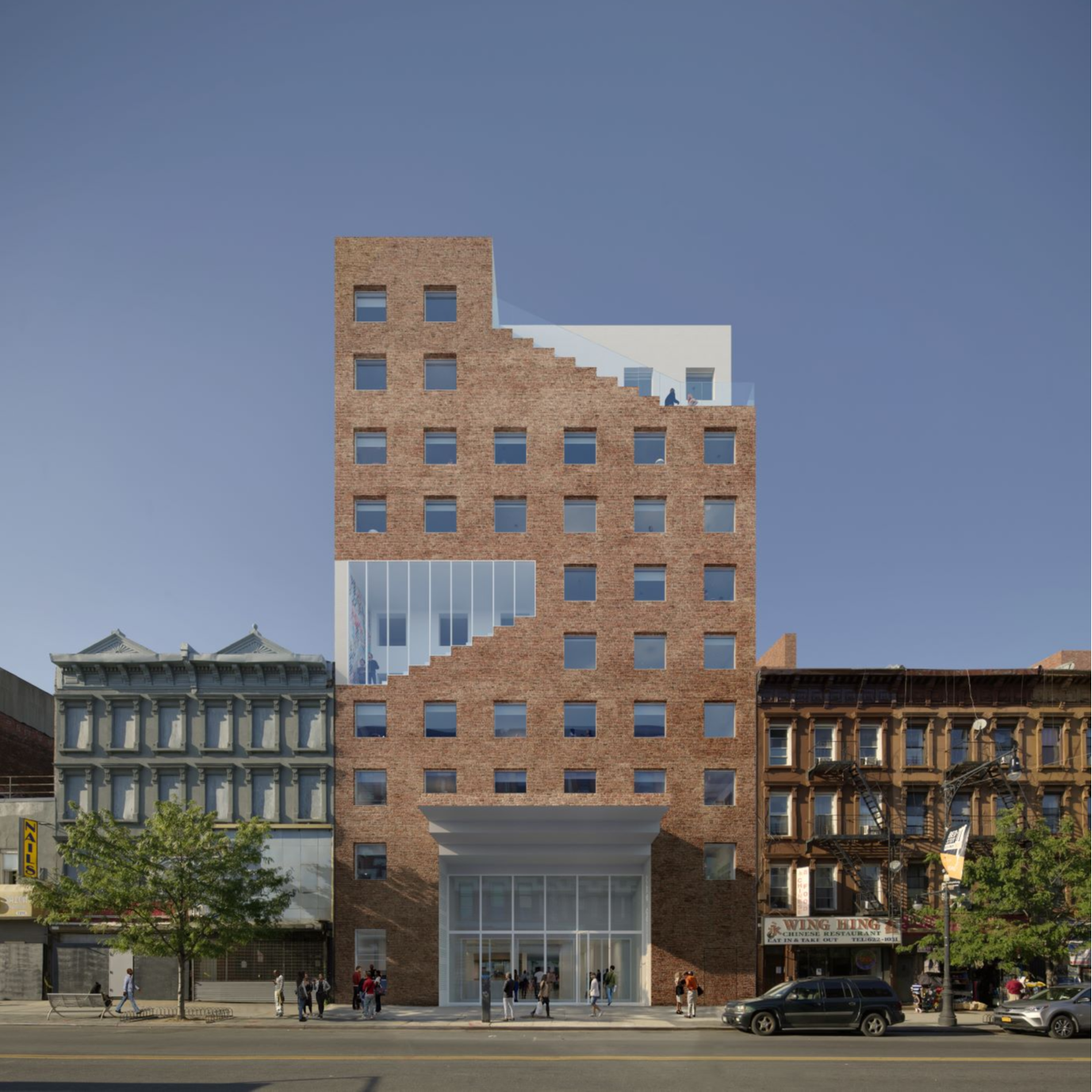
New York scheme: 1215 Fulton Street in Brooklyn
The US team has plenty of opportunities to do that. The company has also secured sites for co-living schemes at 1215 Fulton Street in Bedford Stuyvesant, Brooklyn; 292 North 8th Street in central Williamsburg, Brooklyn; 2825 NW Second Avenue in Miami’s Wynwood District; and 633 LaSalle in Chicago.
Each plot has its own unique characteristics. The site at 1215 Fulton Street, which will be transformed into a 240,000 sq ft, 440-unit scheme with a GDV of $260m, is the former home of the famous Slave Theater and is being designed by Japanese architect Sou Fujimoto and brought forward with New York-based boutique developer Tower Holdings and Ismael Leyva Architects, for instance.
At 292 North 8th Street, the 100,000 sq ft building will provide 224 units, 97 of which will be specifically for students attending local universities.
Meanwhile, in Miami, it is delivering a 325,000 sq ft scheme in the city’s hip Wynwood District with legendary local real estate developer Tony Cho – the scheme has a GDV of $210m – and in Chicago, it is moving forward with a 170,000 sq ft development.
Penfold says all the US sites will offer a mix of short stay and long stay in the same way as the company’s Canary Wharf offering does. “The rationale behind this is we see a need for people who are travelling ‘global citizens’ to be able to stay with us and also get that sense of community and belonging that we offer to our longer-stay members,” he says.
It is not just ‘global citizens’ that find co-living appealing, says Penfold. “We believe that co-living is a mindset. It’s not an age thing. It’s for anyone who is open-minded and looking to be part of a community,” he contends.
“We currently have people living and staying with us from the age of 18 up to 67. Around 25% of our members are now 35 years old-plus and that’s just happened naturally. That hasn’t happened because we’ve gone ‘let’s go and find these people’. These people have naturally been drawn towards the offering.”
Residents range from young people who have just moved away from home through to divorcees and older people who are selling their homes and downsizing. “There are quite a few 60-year-olds [who have downsized and are] living in our buildings in London,” he says.
Broadening demand is one reason Merchant is so bullish about the company’s growth prospects, particularly in the US, which he believes could one day account for 40% to 50% of The Collective’s global presence.
“If you think about the US in terms of its population of around 300 million people, you have far fewer barriers in terms of expansion across the country relative to, say, expansion across Europe where you have language barriers and completely different laws and cultures across countries,” says Merchant.
Focus on tier-one cities
“We’re focused on tier-one gateway cities where you have these macro factors at play that are causing a real crisis, and not just in terms of housing but also in terms of loneliness and isolation. The US has several cities where our product would work well.”
Another plus is the country’s planning regime, which offers greater transparency and certainty than you get in the UK.
“In New York, everything is usually zoned, so when you buy a site you know exactly how many square feet you can build and the mix of uses you can have, which isn’t the case at all in London,” explains Merchant.
“When you buy a site [in London], you have to go through a long and painful planning process, but in the US the development process is shortened and more certain because you don’t have the same issues with planning.”
Given the relative ease of developing in the US, it is little wonder that the US team is constantly looking for new opportunities. Koster says many tier-one cities across the US and Canada are crying out for what The Collective has to offer.
“The question we get all the time is: ‘Why co-living and why now?’” he elaborates. “The reason is we are finally starting to address the need for high-volume affordable housing in the right places. Traditionally, the market has been about delivering either hotels at the top end of the market or multi-family residential at the top end of the luxury market.
“Then there has been this long trickle-down effect to serve everyone else in between. But we’re coming in as a new thing to offer exactly what people need immediately. And that is resonating very well in New York and in other cities. I think we’re going to start to see the growth go across the US very fast.”
As in all exciting new markets, The Collective faces growing competition. Koster acknowledges that other developers and operators have identified the same opportunities in Europe and the US. However, The Collective has a key advantage over rivals, he argues.
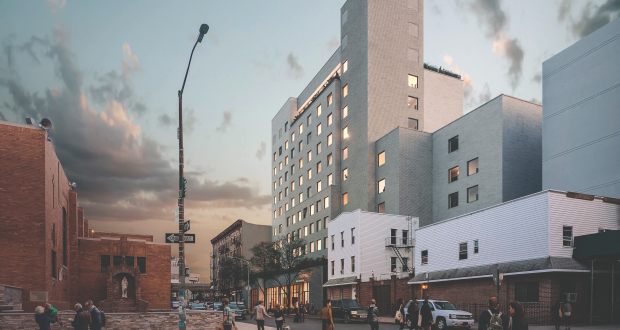
Student focus: 292 North 8th Street, also in Brooklyn
“These are developers that are getting into co-living because they think it’s the right thing to do, or the profitable thing to do,” says Koster. “But their core business is something else. Their core business is just building buildings, but our value is what we’re doing inside the buildings and how we do it and how we engage with everybody.
“We’re trying to build a cohesive experience from start to finish in the right kind of building. We look at this holistically because we’ve been doing it for a decade. We’re not a company that did something else that’s now getting into this because we think it’s hot. This is what this company does full on.”
At the moment, the US is occupying a lot of Merchant’s time and energy, but he has equally ambitious plans to grow the business’s footprint in Europe.
“We’re currently in the UK, Ireland and Germany and for now these are very much the focus areas in Europe, but I think it’s only a matter of time before we start to acquire sites in other European cities,” he says.
In the longer term, he sees the company spreading its global reach further still. “Big Asian cities have the same macro fundamentals as European and US cities do in terms of the lack of a good-quality supply of affordable accommodation for people on middle incomes – accommodation that’s really focused on community and providing a great lifestyle for people,” he says.
The recent funding round was completed with a view to financing these growth plans, but Merchant says that while attracting finance is important, enriching himself is not.
“Money is important, but it’s not our end goal,” he says. “We don’t just want to do this to make as much money as possible. For us, money is the means with which we can do amazing projects, hire great people and create amazing environments, but the goal is ultimately to have the biggest impact that we can and to make a positive difference to the world.”
Social impact
Merchant practises what he preaches. He doesn’t own his home and 90% of whatever he is “personally entitled to” from the company’s profits is ploughed back into the business. His aim is to eventually allocate the ring-fenced 90% to The Collective’s charitable foundation.
He says he realised a while ago that what would fulfil him most would be to “make the biggest impact and difference I could on society rather than any material possession or personal wealth”.
Such statements make the occasional comparison between The Collective and WeWork sound somewhat unfair. Merchant and his team seem genuinely committed to helping communities ‘Be more together’, as per the company’s strapline.
The US, in particular, is set to feel the co-living love in the next few years.“We spent last year getting planning permissions through across the different regions [in the US],” says Merchant.
“So this year it’s all about moving to the construction phase and seeing these sites starting to come out of the ground. It’s going to be a great feeling seeing all that hard work pay off.”
With The Collective Paper Factory, it is already starting to.