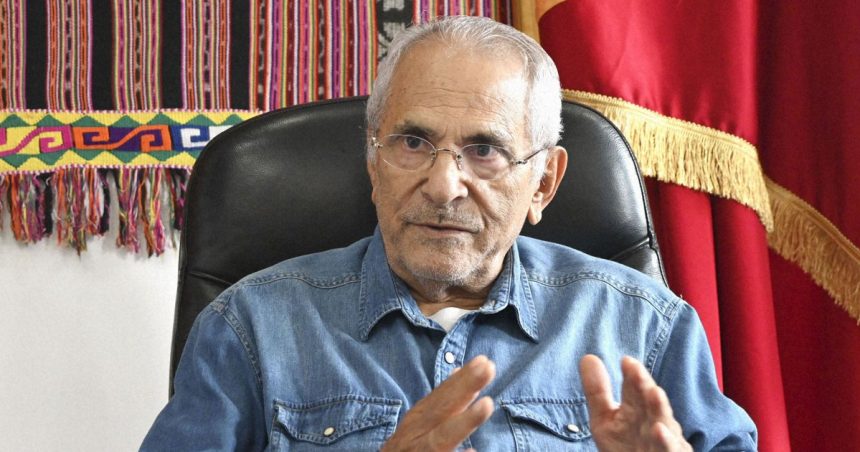

DILI (Kyodo) — East Timor President Jose Ramos-Horta has expressed hope for more Japanese investment after his country’s accession to the Association of Southeast Asian Nations at a summit in Malaysia later this month.
Ramos-Horta said in an interview with Kyodo News on Friday that a Japanese shipbuilding company plans to begin production in East Timor by 2028, adding the project could open the door to broader investment, including potential car assembly plants.
Japan has long supported East Timor through aid focused on infrastructure, human resource development, and technical cooperation. Many young East Timorese are in Japan learning welding and painting skills as technical trainees.
He was responding to a question on whether East Timor needs Japanese development assistance, given that it still struggles with poverty and high unemployment. East Timor is slated to become the 11th member of the ASEAN regional bloc by the end of October.
Ramos-Horta said job-generating investment from nations such as Japan is very welcome, adding that joining ASEAN represents a “tremendous opportunity” for East Timor’s growth and that his country hopes to advance together with the bloc.
“We have been preparing for 23 years and now we are ready to join. We are ready to deliver and do our responsibility,” he said.
He said a pressing question is whether the next generation of East Timorese leaders can manage upcoming opportunities and challenges.
Ramos-Horta’s term in office is scheduled to end in 2027, when new leadership is expected to take over from the current administration that has dominated the nation’s politics for more than two decades.
“The challenges are enormous, while the opportunities are (also) enormous,” he said.
East Timor was a Portuguese colony for centuries until 1975, when Indonesia invaded and annexed it as its 27th province. After the resignation of Indonesian President Suharto, East Timor voted to separate from Indonesia in a U.N.-supervised referendum in 1999.
In 2002, East Timor gained independence from Indonesia after 24 years of occupation. The country is still relatively poor with an economy that relies heavily on oil and gas resources and foreign aid.