Written By Wudan Yan / Edited By Jessica Militare
As an oncologist and chief patient officer at the American Cancer Society, Dr. Arif Kamal is all too familiar with the financial toll of a cancer diagnosis. One of his patients — a 40-year-old man who’s never smoked, but is currently being treated for lung cancer — holds a stable white-collar job that would typically offer financial security. Since his diagnosis, however, Kamal’s patient has taken gigs delivering food and driving rideshares to help manage the costs of treatment and care.
“He’s like, ‘I don’t know what else to do,’” Kamal recalls of their last appointment. “I said, ‘I need you to heal and get better, not drive at all hours of the night.’ That’s the impossible choice that many patients face.”
![ACS HL IMAGE [BR_EOY_2025_Researchers_Z60ii_JPG_0365]](https://specials-images.forbesimg.com/imageserve/68ffab3323d110517a1b3917/ACS-HL-IMAGE--BR-EOY-2025-Researchers-Z60ii-JPG-0365-/960x0.jpg?fit=scale)
For many cancer patients, the emotional and physical demands of treatment are compounded by a financial burden that can be just as overwhelming. An American Cancer Society survey shows that most patients and survivors are worried about affording their healthcare costs, and other research finds that more than 1-in-5 cancer patients in the U.S. struggle to meet at least one basic need. The hardships associated with medical costs — often referred to as financial toxicity — are linked to delays in treatment, greater distress and higher risk of relapse and death.
That’s why the American Cancer Society is going beyond solely identifying the issue of financial toxicity; They’re actively working to solve it with the support of business leaders. Strong corporate partnerships help power the ACS’ critical work, including patient support programs that provide free lodging and transportation to treatment, as well as lifesaving research and healthcare advocacy.
Read below to learn more about how the American Cancer Society and its partners are working together to reduce the financial burden of cancer.
Why The Cost Of Cancer Impacts Everyone
Cancer isn’t just a health crisis — it’s a financial one. Cancer-related costs for U.S. patients are estimated at $21.1 billion, including $16.2 billion in total out-of-pocket expenses and $4.9 billion in patient time costs, such as traveling to treatment or waiting to receive care.
It’s no surprise, then, that American adults aged 18 to 64 with a cancer history are more likely to report financial hardship. The health implications are serious: Those with cancer-related medical debt are three times more likely to be behind on recommended cancer screenings, and financial strain is linked to worse health outcomes and higher rates of premature death.
“Financial toxicity becomes a function of time — and because people are living longer, it is a more salient issue than ever before,” Kamal says.
Studies show an increase in cancer diagnoses in younger and working-age adults, who are especially vulnerable to medical debt. Cancer is the top condition driving employer healthcare costs, and the financial impact extends well beyond insurance claims — affecting business productivity, employee well-being and household income.
Even for those in their 30s and 40s, a diagnosis can devastate financial resilience, which Kamal explains is compounded by medical bills and out-of-pocket costs for promising treatments insurance doesn’t cover, as well as lost income from missed work. Caregivers, often spouses, may also need to take time off to help their partner, further shrinking income and contributing to workforce absenteeism.
“As a result of financial hardship from cancer, survivors frequently forgo recommended care, including preventive services,” says Robin Yabroff, scientific vice president of health services research at the American Cancer Society, who has led research documenting the impact of financial hardship and medical debt on health outcomes in patients with cancer. “Patients and families also experience food and housing insecurity, which can affect their ability to maintain healthy lifestyles and seek health care,” she says. “The combination of all these factors can increase mortality risk.”
In fact, 4 in 10 cancer patients and survivors experience food insecurity, and nearly one-third have had to choose between buying food and affording care. “I have cancer again and have chosen to not go through treatment again because I have had to choose between rent and food over medical care,” shared a Texas patient in a survey for the American Cancer Society Cancer Action NetworkSM (ACS CAN), the organization’s advocacy affiliate.
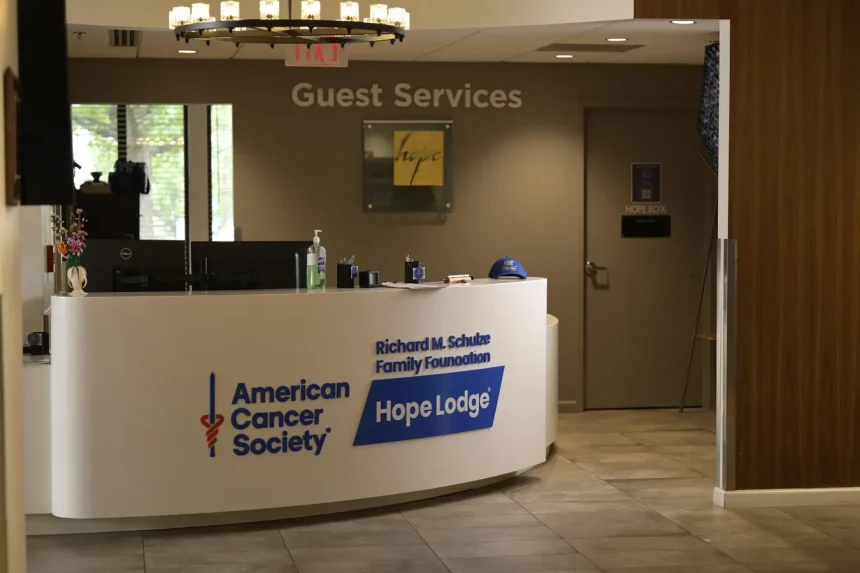
At the American Cancer Society, Kamal oversees efforts to reduce these burdens. Lodging and transportation remain two of the largest barriers to care. American Cancer Society Hope Lodge® communities provide free housing for patients who must travel for treatment, while the Road To Recovery® program connects people with cancer to volunteer drivers for free rides to cancer-related appointments.
Cancer survivor Barbara Jackson, who stayed at a Hope Lodge community during treatment, says she didn’t know how essential these services were until she needed them.
“It lightened the burden so much — not worrying about money to pay for a place to live, not worrying about money to have food,” she says. “We have so much on our shoulders as it is … and that’s the last thing we want to worry about. But when we come to Hope Lodge, we don’t have to worry.”
Advocacy is also a critical piece. Lisa Lacasse, president of ACS CAN, stresses the importance of affordable health insurance — and the limitations many patients still face. “Research shows that having health insurance is one of the most significant determining factors in surviving a cancer diagnosis,” she says. “But even with insurance, cancer treatment and lifelong follow-up care can come with very high out-of-pocket costs.”
An ACS CAN survey found that nearly half of cancer survivors report being burdened by medical debt, and nearly all had coverage. ACS CAN is urging Congress to prioritize affordable health care and publishes a report with policy solutions focused on easing financial toxicity, including capping out-of-pocket costs, ensuring no costs for preventive services, and removing medical debt from credit reports.
How Corporate Partner Collaborations Create Meaningful Solutions
Fighting the financial toxicity of a cancer diagnosis is beyond what the American Cancer Society can accomplish alone. That’s why the organization has been collaborating with corporate partners to reduce these financial burdens.
“When brands come alongside us, they help remove barriers to care and ensure no one has to compromise their health because of the cost of cancer,” says Nickki Reeves, senior vice president of enterprise corporate & sports partnerships at the American Cancer Society.
Insurance company Aflac has partnered with the American Cancer Society to provide Employer Wellness Toolkits, a resource created to help companies empower employees and individuals to take an active role in cancer prevention and early detection.
“Our goal is to drive a healthier America and help create better cancer outcomes,” says Virgil Miller, president of Aflac. “We know that a cancer detected at stage I has a significantly smaller financial impact on a policyholder than a later-stage diagnosis, [and] early detection is the best defense.”
The American Cancer Society is also working with corporate partners to co-develop unique strategies that mutually benefit stakeholders and galvanize the fight against cancer’s financial toxicity. Global asset manager Janus Henderson Investors helped spearhead one such initiative with particular success.
Janus Henderson donates an amount equal to 50% of its management fees from all assets under management in its Money Market Fund. This means that simply by investing, clients help provide crucial support for the American Cancer Society’s research and patient services, putting dollars directly toward fighting the financial toxicity associated with cancer.
“Through an innovative partnership, our clients can invest cash in our Government Money Market Fund to create meaningful financial support for ACS’ critical mission in advocacy, research and patient services — advancing progress and creating hope and a brighter future for patients and their families,” says Nick Cherney, head of innovation at Janus Henderson Investors.
As Reeves explains, partners like Aflac and Janus Henderson Investors exemplify how corporate collaboration can make a tangible difference.
“From promoting cancer screening and healthy living to encouraging investment planning that prepares families for future healthcare costs, our partners help the American Cancer Society ease the financial burden of cancer for employees and their loved ones, when it matters most,” she says.
Driving Future Impact Through Awareness And Action Today
“Ensuring that people have affordable and comprehensive health insurance coverage is a critical area for intervention to help mitigate financial hardship, improve access to cancer care and improve health outcomes,” says Yabroff, adding that employers can do their part by designing employment policies that mitigate financial hardship and offering paid leave to workers for cancer care.
Yabroff says the American Cancer Society health services research team is conducting multiple studies examining the effects of policies and interventions aimed at increasing health insurance coverage and paid leave for earlier stage cancer diagnosis, reduction in financial hardship, receipt of recommended treatments, and better survival.
The American Cancer Society believes that corporate partnership will not only help spread greater awareness of this critical issue but also help provide robust programs and solutions to relieve financial hardships at all phases, from cancer prevention through survivorship. That sentiment is echoed by Miller, who says corporate partners are uniquely positioned to help spread awareness and drive real impact.
“Each year, hundreds of billions of dollars are spent in the U.S. for cancer care,” Miller says. “It is a challenge that exceeds the reach of single entities, which is where I hope to encourage my fellow business leaders to take an active role. It requires partnerships, like the one that we have with the American Cancer Society, to tackle such a daunting issue.”
To learn more about how your company can get involved, visit Cancer.org/BecomeaPartner.