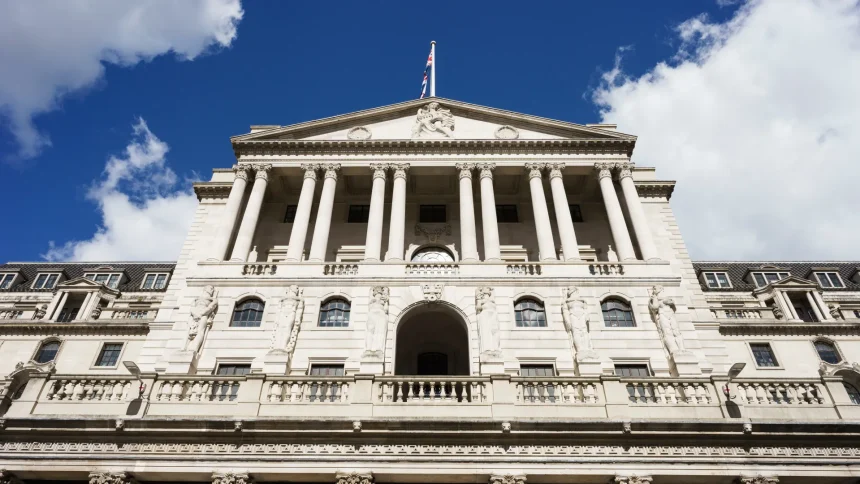
THE Bank of England kept interest rates on hold for a second meeting running, disappointing homeowners hoping for mortgage relief.
During today’s Monetary Policy Committee (MPC) meeting, the Bank of England’s (BoE) policymakers voted to keep the base rate steady at 4%.
They also left rates at 4% in September, after cutting them from 4.25% in August.
Members of the nine-strong committee voted five to four in favour of maintaining the rate, which is used to dictate mortgage rates and other borrowing costs, but pointed to a “gradual” easing of rates in the longer term.
Andrew Bailey, governor of the Bank of England, said: “We still think rates are on a gradual path downwards, but we need to be sure that inflation is on track to return to our 2% target before we cut them again.”
Forecasters were split on the odds of a cut today.


Goldman Sachs – and later Barclays – shifted their view, calling a 0.25 percentage point cut a near certainty.
However, traders were not convinced.
The Bank has cut rates five times since last August as it tries to bring inflation back to 2% while supporting weak growth.
Inflation fell more than expected to 3.8% last month.
Despite this, policymakers chose to wait and keep rates unchanged.
By maintaining the base rate at its current level, the goal is to curb borrowing and spending.
The Bank said inflation has peaked and is expected to fall to nearly 3% next year before returning to its 2% target in 2027.
It had previously predicted that inflation would peak at 4%.
However, striking the right balance between controlling inflation and supporting economic growth remains a challenge.
Analysts have warned that the upcoming November 26 Budget is likely to slow the economy, as higher taxes are expected to leave people with less money to spend.
The BoE said gross domestic product (GDP) is predicted to reach 1.5% over 2025, higher than the 1.2% that the Bank last projected in August.
Growth will then slow to 1.2% in 2026, unchanged from its previous forecast.
However, a weakening jobs market means that the rate of unemployment could rise to 5.1% by spring next year.
This is higher than the 5% peak the Bank predicted before.
Employment growth is expected to remain “subdued” amid declining job vacancies and on the back of firms slowing hiring in response to higher taxes.
Chancellor Rachel Reeves said: “Under this Government, we have seen five interest rate cuts that have helped bring down costs for families and businesses and today’s forecast shows that inflation is due to fall faster than previously predicted.
“At the Budget later this month I will take the fair choices that are necessary to build the strong foundations for our economy so we can continue to cut waiting lists, cut the national debt and cut the cost of living.”
The Bank’s MPC will meet to review the base rate again on December 18.
SUN ECONOMICS EDITOR AT BANK OF ENGLAND
By Ryan Sabey, Economics Editor and Deputy Political Editor:
A KNIFE-EDGE vote at the Bank of England has seen interest rates kept on ice – but an early Christmas present for homeowners could be on the cards.
Rate-setters decided by by 5-4 votes to keep interest rates at 4% but there are positive signs on the horizon – with inflation hitting its peak.
A potential drop in rates next month may even soften the blow for many after Chancellor Rachel Reeves’ Budget as she lays the groundwork for tax hikes.
She will also welcome the Bank’s upgrade for growth this year and in 2027 amid the gloomy economic outlook.
But bank chiefs have outlined in their 77-page report that they need more evidence that inflation is under control before they will act.
The good news is that the current 3.8% inflation rate “is likely to be the peak” as households struggling amid spiralling prices, the Monetary Policy Report states.
Food prices are expected to remain “elevated” for this year but fall back next year in a partial boost for families.
Consumer confidence has so far shown no sign of increasing. One sign of this is fashion retailers reveal they have tough competition from the second-hand market such as Vinted.
Bank of England Governor Andrew Bailey spelled out his thoughts alongside today’s rates decision saying that rates are on a “gradual downward path”.
Those with a keen eye will notice that the word “careful” has been omitted from the trajectory given more rise to optimism.
He also states that he needs to be “sure” inflation is heading back to the 2% target before rates are cut again. The Bank meets next month just days before Christmas.
Bailey – who voted to maintain rates at 4% – insists he needs to see more economic data on inflation, labour costs and wage growth before he pushes for a cut.
The Bank’s report also says that increases in employer national insurance costs and national living wage have “weighed” on employment growth, according to businesses surveyed.
The changes in employer national insurance has already lowered employment by more would have done otherwise.
In their study, Bank staff estimate that an increase in the national living wage has boosted wage growth by 0.2% this year.
Here is what today’s decision means for your money.
Mortgages
When rates are held, mortgage rates usually do not change very much, but we’ve been seeing fixed rates come down in recent weeks as lenders battle it out.
Today’s announcement means that those on tracker or standard variable rate mortgages won’t see any change to bills.
There are 591,000 customers on tracker mortgages and 540,000 on SVRs, according to UK Finance.
Most mortgage holders, over 7.1million, are on fixed-rate deals, so their payments don’t change until their current deal ends.
However, more than 1.6million fixed-rate mortgages are set to expire this year, meaning many homeowners could face higher rates due to recent interest rates climbing to 6% in recent years.
Experts don’t expect rates to return to the record lows of 1-2%, but lenders have recently been cutting rates, with two-year deals now at their lowest in nearly three years.
The average interest rate for a two-year fixed mortgage is now 4.93%, dropping by 0.06% in the past month, according to moneyfactscompare.co.uk.
Two-year mortgage rates haven’t been this low since September 2022, when they were 4.24%.
Similarly, the average rate for a five-year fixed mortgage is 5%, down by 0.02% over the past month.
Alice Haine, personal finance analyst at Bestinvest by Evelyn Partners, the online investment platform, said: “For mortgaged homeowners, the headline interest rate may not have shifted, but the good news is that mortgage affordability has improved for some.
“Five rate cuts since last summer, a more relaxed lending environment, slower house price growth and strong wage gains have helped to ease affordability pressures.
“However, today’s decision to hold rates, coupled with uncertainty over potential property tax hikes in the upcoming Budget may feel unsettling for homeowners and prospective buyers alike.”
How to get the best deal on your mortgage
IF you’re looking for a traditional type of mortgage, getting the best rates depends entirely on what’s available at any given time.
There are several ways to land the best deal.
Usually the larger the deposit you have the lower the rate you can get.
If you’re remortgaging and your loan-to-value ratio (LTV) has changed, you’ll get access to better rates than before.
Your LTV will go down if your outstanding mortgage is lower and/or your home’s value is higher.
A change to your credit score or a better salary could also help you access better rates.
And if you’re nearing the end of a fixed deal soon it’s worth looking for new deals now.
You can lock in current deals sometimes up to six months before your current deal ends.
Leaving a fixed deal early will usually come with an early exit fee, so you want to avoid this extra cost.
But depending on the cost and how much you could save by switching versus sticking, it could be worth paying to leave the deal – but compare the costs first.
To find the best deal use a mortgage comparison tool to see what’s available.
You can also go to a mortgage broker who can compare a much larger range of deals for you.
Some will charge an extra fee but there are plenty who give advice for free and get paid only on commission from the lender.
You’ll also need to factor in fees for the mortgage, though some have no fees at all.
You can add the fee – sometimes more than £1,000 – to the cost of the mortgage, but be aware that means you’ll pay interest on it and so will cost more in the long term.
You can use a mortgage calculator to see how much you could borrow.
Remember you’ll have to pass the lender’s strict eligibility criteria too, which will include affordability checks and looking at your credit file.
You may also need to provide documents such as utility bills, proof of benefits, your last three month’s payslips, passports and bank statements.
Credit card and loan rates
There is unlikely to be any change after today’s announcement.
If the base rate is changed, the cost of borrowing through loans, credit cards and overdrafts can go up when they rise and sometimes borrowing will get cheaper if they fall.
However, certain loans, such as personal loans or car financing, usually stay the same, as you have already agreed on a rate.
With rates held, any rates you are paying on credit cards and loans are unlikely to change for now though.
Holly Tomlinson, financial planner at Quilter said: “Higher interest rates mean borrowing remains expensive, whether you’re using a credit card, personal loan, or car finance.
“With today’s decision to hold rates, credit costs won’t rise further for now, but they are unlikely to fall significantly in the short term.
“For those planning to borrow, it’s important to shop around and avoid taking on unnecessary debt, as rates will remain higher than they were just a couple of years ago.”
How can I find the best credit card rates?
YOU should always use an eligibility calculator before applying for credit.
That’s because every credit card application leaves a mark on your credit file and can affect your credit score.
To assess all the available cards, visit price comparison websites like MoneySavingExpert’s Cheap Credit Club or Compare the Market.
Once you run your details through an eligibility calculator and you’ve been shown that you’re likely to be accepted, make a formal application.
To do this, you will need to provide your name, address and email address as well as details of your income so a provider can assess your eligibility.
You will also need to provide details of how much money you want to transfer to the new card, but you can often do this after you have been accepted.
If your application is approved, you will need to transfer the balance within a set period, usually around 60 or 90 days.
Your old balance will then be cleared and you can start making interest-free repayments on your new card.
Savings rates
Savers have benefited the most from rising interest rates, as banks compete to offer the best deals.
However, banks are often slow to pass on rate increases to savers, and with recent rate cuts by the Bank of England, the best savings rates could disappear.
Since November 2024, average rates for easy access and notice accounts have declined.
The average easy access rate dropped from 3.03% to 2.52%, while notice account rates fell from 4.22% to 3.95%.
Rachel Springall, finance expert at moneyfactscompare.co.uk, said: “Savings rates are getting worse and base rate reductions spell further misery for savers.
“It is essential that savers do not wait around for too long to snap up the top rates on the market, particularly if they use their pots to supplement their monthly income.
“Loyalty does not pay, so it is crucial savers look towards building societies and challenger banks for better savings returns.”
Luckily, some savings accounts still pay up to 5%.
For example, Cahoot’s Sunny Day Saver offers 5% interest, and you can start saving with just £1.
If you save £5,000 in this account for a year, you’ll earn £250 in interest.
But don’t expect these deals to last for long.
How can I find the best savings rates?
WITH your current savings rates in mind, don’t waste time looking at individual banking sites to compare rates – it’ll take you an eternity.
Research price comparison websites such as Compare the Market, Go Compare and MoneySupermarket.
These will help you save you time and show you the best rates available.
They also let you tailor your searches to an account type that suits you.
As a benchmark, you’ll want to consider any account that currently pays more interest than the current level of inflation – 3.6%.
It’s always wise to have some money stashed inside an easy-access savings account to ensure you have quick access to cash to deal with any emergencies like a boiler repair, for example.
If you’re saving for a long-term goal, then consider locking some of your savings inside a fixed bond, as these usually come with the highest savings rates.
Pensions
The BoE’s base rate also impacts pensioners looking to buy an annuity.
A pension annuity converts your pension pot into a guaranteed regular income for the rest of your life.
However, because annuity rates are linked to the cost of government borrowing, any rise or fall in the BoE’s base rate can impact the rate you receive.


The income you receive can be locked in on the day you purchase your annuity, so current annuity rates can make a big difference to your long-term financial security.
With interest rates unchanged, pensioners will still be able to secure favourable rates.