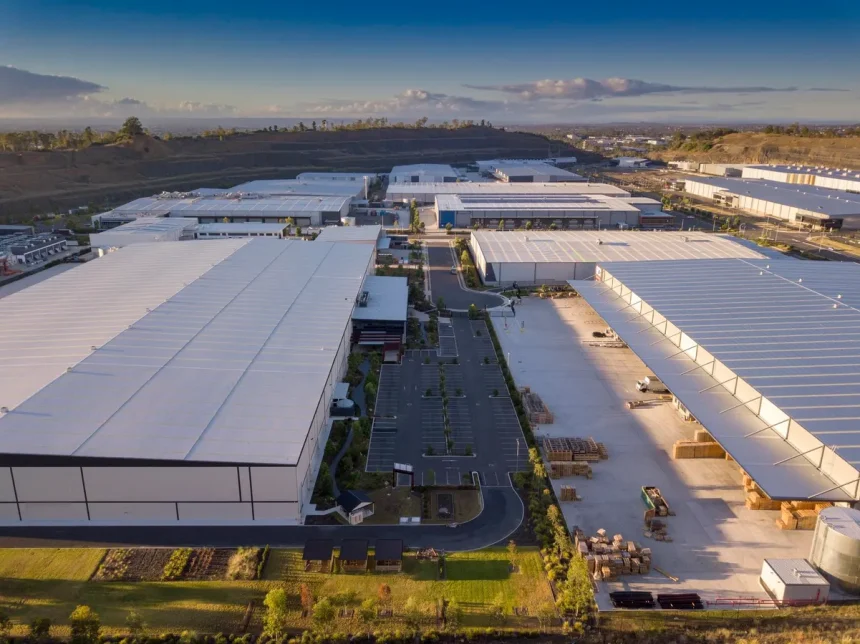

The location of Industrial warehouses, both large-scale and urban infill, is among many considerations commercial real estate investors will carefully weigh in the year ahead.
getty
Cautious optimism is the order of the day for commercial real estate’s industrial sector in 2026. Leading forces helping mold the sector this year are reshoring and nearshoring, expansion of ecommerce and automation’s ever larger role.
These trends will play out against a backdrop of limited supply, escalating labor and building costs, and increasing appetite among industrial tenants for tech readiness, flexible square footage and healthy access to energy. Watch for an increased focus on development of pre-leased build-to-suit facilities and phased developments in locations near ports and rail lines.
In its ”2026 Commercial Real Estate Outlook,” Deloitte predicts steady long-term growth ahead due to structural demand patterns for industrial properties. The firm reports developers have moved away from speculative developments and toward establishing a robust built-to-suit project pipeline. As onshoring and nearshoring of high-value manufacturing become ever-larger factors in industrial real estate, Deloitte forecasts growing interest in specially designed manufacturing facilities and advanced logistics.
Port and rail
Increased demand for industrial facilities near ports or rail routes is another emerging trend in the industrial sector. It’s a movement that’s been scrutinized by AEBOV Industrial Real Estate Brokerage, a real estate firm specializing in warehouses, manufacturing facilities and distribution centers, from its headquarters in New York City. Though a comparatively limited share of industrial facilities adjacent to railways or waterways have changed hands, they accounted for a disproportionate percentage of the dollar volume, says Daniel Tropp, founder and president of AEBOV.
This, he adds, is a clear reflection of the lofty values placed by industrial investors upon assets boasting trimodal attributes. Noted a recent AEBOV NYC Industrial Market Report, “Policy changes at the civic level, such as Congestion Pricing and the Blue Highway initiative, have clearly resonated with investors seeking to capitalize on the city’s efforts to reduce dependency on trucks for freight movement.”
Energy interdependence
As they will in other sectors of commercial real estate, investors in the industrial sector will increasingly value dependable, clean and cost-effective power as highly as they do location when gauging attractive opportunities. That’s the view of JLL in its 2026 Global Real Estate Outlook. One of the half dozen “forces reshaping real estate” in the coming year is what the firm calls “convergence of buildings and power.” Industrial facilities are now being run as components of power systems. They will need to generate, store and manage electricity and take part in the next iteration of local energy markets.
Along with energy, JLL sees manufacturing driving the largest spurt in infrastructure investment since World War II. The firm envisions manufacturing mushrooming in the year ahead, with reshoring and nearshoring driving demand for manufacturing facilities. Between 19% and 30% of all industrial space in the U.S. is predicted to be leveraged for manufacturing within the next two years.
Connective tissue
Among points emphasized by J.P. Morgan in its “2026 Commercial Real Estate Outlook” is that as retail goes in the year ahead, so goes industrial. The firm noted the robust momentum heading into this year of retail subsectors such as grocery-anchored and neighborhood shopping centers. That success should in turn benefit not only big box warehouses but smaller, less-than-200,000-square-foot infill distro centers close to rooftops. Their proximity to America’s e-commerce shoppers will keep driving investor interest in what’s typically referred to as “small bay” or micro-flex industrial facilities.
Speaking of e-commerce, another outgrowth of that retail phenomenon is the growing demand for industrial outdoor storage, according to Tropp. These secure sites are frequently near rail and freight centers, as well as ports. Tropp views industrial outdoor storage as a specific and highly coveted commercial real estate asset class already racking up spectacular growth in some of the nation’s leading metropolitan areas.