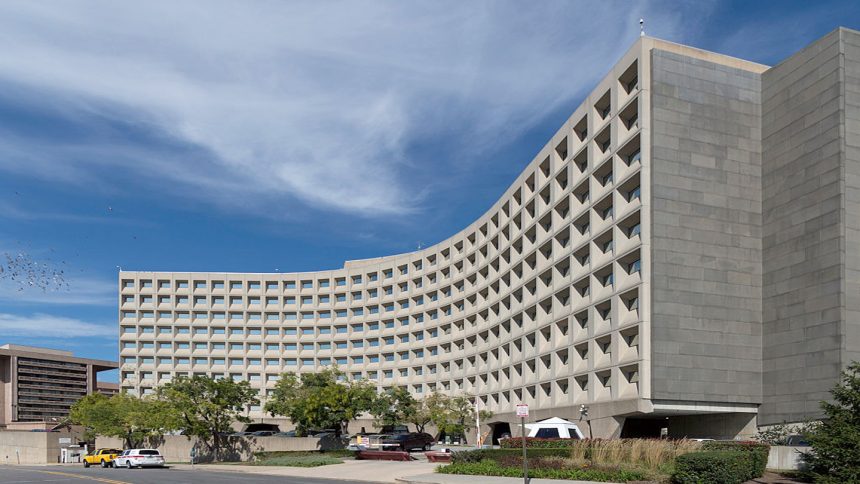
The Federal Housing Administration saw a “landmark year” for the Section 232 healthcare program in fiscal year 2025, issuing a record-breaking $8.1 billion in firm commitments and closing $6 billion in mortgages across 337 Section 232 loans for residential care facilities, the Department of Housing and Urban Development announced Thursday.
FHA insures mortgages for residential care facilities — skilled nursing facilities, assisted living communities, board and care homes, and intermediate care facilities — under Section 232 of the National Housing Act. The 2025 total, according to HUD, almost doubled the $4.1 billion in Section 232 firm commitments that FHA approved in FY 2024.
“The more than $4 billion increase in closed loan volume in FY 2025 underscores the effectiveness of FHA’s renewed focus on execution,” according to the agency.
Section 232 can be used to finance the purchase, refinance, new construction or substantial rehabilitation of a project. HUD noted that that projects can include more than one type of care, such as the refinancing of a nursing home coupled with the new construction of an assisted living community.
“By cutting red tape and implementing common-sense reforms under the leadership of Federal Housing Commissioner Frank Cassidy, FHA is delivering critical capital to support some of America’s most vulnerable populations while protecting the taxpayer,” HUD Secretary Scott Turner said in a statement.
In addition to record capital deployment, HUD said that FHA “dramatically reduced its backlog of outstanding Section 232 applications,” going from 130 at the start of FY 2025 to 29 by the end of it on Sept. 30.
A “key driver”of the FHA’s success in FY 2025, HUD said, was the express lane program for Section 232/223(f) applications that meet certain low-risk criteria opened in June. Qualified applications receive queue priority.
The express lane led to expedited processing times, providing firm commitments within seven to 10 days, with some approvals completed as quickly as two days, the agency said. Full transactions are closing in as few as 70 days, from firm application submission to loan closing, under the new program, HUD added.
“The healthcare express lane was born out of my firsthand experience in the private sector executing these exact types of deals,” Cassidy said. “Secretary Turner and I knew FHA could deliver the same speed, certainty and professionalism the market expects without sacrificing discipline.”
Cassidy joined HUD in April 2025 as the principal deputy assistant secretary for HUD’s Office of Housing and FHA. Before joining HUD, he worked in commercial mortgage banking and real-estate finance, advising developers, owners and investors across the senior housing, multifamily and healthcare sectors. For more than 15 years, Cassidy originated and closed billions of dollars in FHA, Fannie Mae, Freddie Mac, bridge and balance-sheet financing, according to HUD.
“The express lane proves that when government aligns processes with expertise, we can be a catalyst rather than a bottleneck,” he said.