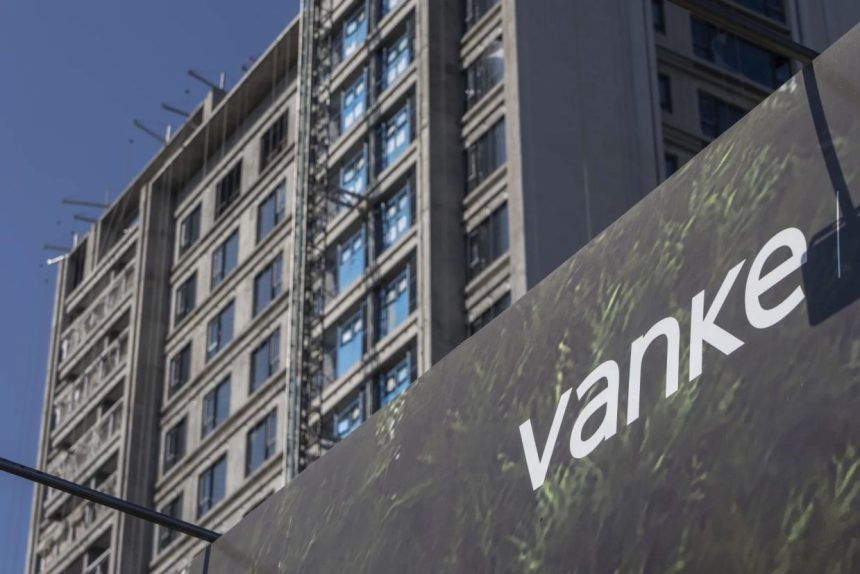
SHANGHAI: China’s real estate sector suffered another blow after China Vanke Co proposed delaying repayment on a local bond, sending some of its notes plunging to record lows and fuelling concerns about Beijing’s willingness to support even the largest distressed developers.
Vanke, once the nation’s largest builder by sales, is seeking to delay paying principal on a two-billion yuan (US$283mil) note due Dec 15, according to a filing with the Shanghai clearing house late Wednesday.
The company’s dollar bond due in 2027 fell 17 US cents yesterday morning to about 23 US cents, the lowest since issuance in 2017.
That brings losses on the note to 60% just this week.
The developer’s surprise move to seek delaying repayment on local debt is another setback for the housing industry, which is still struggling to recover from years of sales declines and massive defaults by China Evergrande Group, Country Garden Holdings Co and others.
Vanke had long been considered one of the healthier property firms.
There were early signs of broader unease spreading.
Yet-to-default builders
Other yet-to-default builders are also coming under pressure, with Longfor Group Holdings Ltd’s dollar bond due in 2028 dropping four US cents, set for the biggest daily decline in more than two years.
“Everyone’s core fear is simple,” said Li Huan, co-founder of asset manager Forest Capital (Hong Kong) Ltd.
“If a flagship name like Vanke defaults or forces a big haircut, the contagion to the whole property sector and credit market will be massive.”
The company’s shares tumbled as much as 8.5% in Hong Kong to a record low, taking its slump since a September high to nearly 40%.
A Bloomberg gauge of Chinese developer shares fell 1.5%, extending its streak of losses to five days, the most since May this year.
The firm will arrange a meeting with holders of the yuan note on Dec 10 to discuss the proposal, the firm said.
The suddenly mounting debt problems facing Vanke have become a key gauge of China’s stance on the real estate sector, which has been a drag on the economy for several years.
Policymakers need to strike a delicate balance of trying to revive the moribund market without having to rescue individual firms.
Vanke’s bid to postpone repayment follows steep sell-offs of its bonds and stocks this week.
“A default by Vanke would indicate that the government’s will to support the property sector is weakening and would deepen the industry slump,” said Leonard Law, a senior credit analyst at Lucror Analytics Pte.
“This would also make it harder for other property developers to issue bonds for refinancing.”
The developer’s two notes maturing next month had been indicated close to par, a sign that investors were betting the debt would be paid on time.
In addition to the Dec 15 maturity, Vanke has a 3.7 billion yuan note due on Dec 28.
Crucial funding
Vanke’s largest shareholder, Shenzhen Metro Group Co, has extended about 30 billion yuan in loans to the cash-strapped builder, a crucial funding source that helped Vanke repay bonds this year.
That lifeline was thrown into doubt after Shenzhen Metro signalled tighter borrowing terms for Vanke, one of China’s largest real estate companies.
“The extension is very surprising to the market,” said Yao Yu, founder of Shenzhen-based credit rating startup RatingDog, adding that support from Shenzhen Metro “has become suddenly meaningless.”
About 13.4 billion yuan of Vanke’s onshore bonds are due to mature or face redemption options by the end of June, according to Bloomberg calculations.
That’s far more than the amount of untapped loans Vanke has available from Shenzhen Metro, based on their latest pact.
Vanke’s contracted sales for the first 10 months of the year were about 100 billion yuan, half the level of a year earlier.
As of September, Vanke held about 60 billion yuan in cash, versus roughly 152 billion yuan in short-term debt, according to estimates from Bloomberg Intelligence analysts Daniel Fan and Hui Yen Tay.
The bond extension “could ease near-term maturity pressure, though around 13 billion yuan in bonds maturing by next June still face extension risk,” the BI analysts noted.
New measures
China has been considering new measures to turn around the housing market, such as subsidising interest costs on new mortgages, sources said last week.
Yet the effects of easing measures in September last year faded after a brief recovery.
“If Vanke’s bonds default at this time, it would undermine the effectiveness of government rescue policies,” said Li Gen, a founder of Beijing G Capital Private Fund Management Centre, which focuses on China’s high-yield bond market.
“It may accelerate the home price declines, and the creditworthiness of other state-owned developers would come under scrutiny.” — Bloomberg