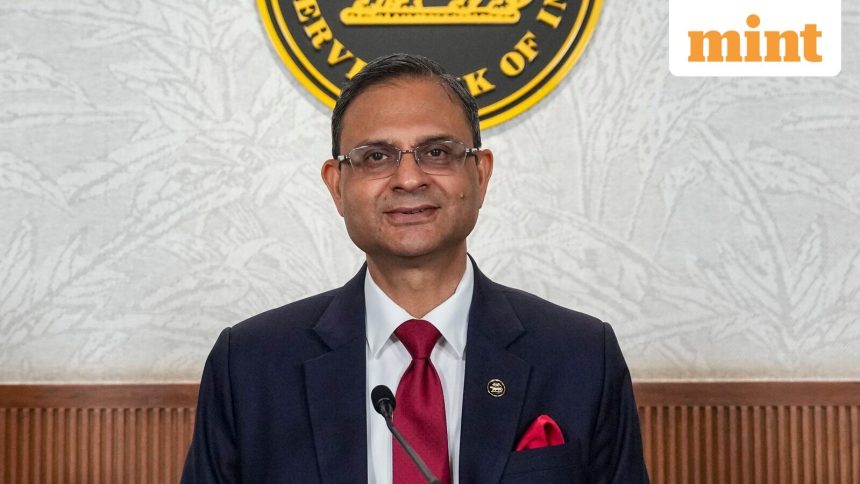
The Reserve Bank of India (RBI) has unlocked a fresh source of funds for the nation’s property sector, allowing banks to lend directly to real estate investment trusts (Reits) for the first time.
The decision, announced on Friday by governor Sanjay Malhotra, ends years of regulatory disparity between Reits and their infrastructure peers, InvITs. By allowing access to bank credit, RBI is providing a cheaper alternative to the expensive bond and commercial paper markets that Reits have traditionally tapped for growth.
“To further promote financing to the real estate sector, it is proposed to allow banks to lend to Reits with certain prudential safeguards,” Reserve Bank of India governor Sanjay Malhotra said while presenting the RBI’s monetary policy statement on Friday.
Reits are regulated asset classes that own and operate income-generating real estate. To an investor, they provide a regular distribution of at least 90% of their cash flows to holders of their units. While India’s Reit market has been an attractive option for global and domestic institutional investors seeking a slice of the country’s profitable property market, it has so far eluded widespread retail interest.
In India, Reits and infrastructure investment trusts were conceptualized to free up banks’ funds for completed and operational real estate and infrastructure projects. This would be done by refinancing such exposures with the pooled funds of institutional and retail investors.
While Infrastructure Investment Trusts (InvITs) were allowed to borrow from banks since 2019, Reits were left out of this financing ease.
This made the latter dependent on equity and bond markets, as well as on more expensive, volatile debt instruments such as commercial paper, to raise funds for growth.
Key Takeaways
- Reits finally gain the same bank-borrowing privileges that InvITs have enjoyed since 2019.
- Access to bank loans will likely reduce Real estate trusts’ weighted-average cost of debt relative to bonds or commercial paper.
- The move supports a market projected to hit a $25 billion market cap by 2030.
- RBI’s nod reflects confidence in the ‘strong regulatory and governance’ frameworks now governing listed trusts.
- The actual impact will depend on the ‘prudential safeguards’ and exposure limits defined in the upcoming draft guidelines.
Mature market
“Upon review and considering the presence of a strong regulatory and governance framework for listed Reits, it is proposed to permit commercial banks to extend finance to Reits,” RBI said.
India’s mainboard-listed Reits include Embassy Office Parks REIT, Mindspace Business Parks REIT, Brookfield India Real Estate Trust, Nexus Select Trust, and the recently launched Knowledge Realty Trust.
These Reits are sponsored by marquee developers and private equity funds like Blackstone, Brookfield, Embassy Group, K Raheja Corp., and Sattva Group.
RBI, on Friday, also said it is harmonizing existing guidelines on lending to InvITs to “parity with prudential safeguards proposed for lending to Reits”.
Draft directions would be issued shortly for public consultation, the central bank said.
“Permitting banks to lend to Reits signals a maturing financial ecosystem where long-term capital, asset monetization and balance-sheet discipline can coexist,” Salee S. Nair, chief executive at Tamilnad Mercantile Bank, said.
RBI’s move comes at a time when the Indian Reits’ market capitalization is projected to rise to $25 billion by 2030 from $18 billion in 2025, according to a Vestian report from January 2026.
Reit-able office stock alone is expected to double from ₹8.2 trillion in 2025 to ₹16 trillion by 2030, while retail and alternative asset classes are also set to scale up, the report said.
“Indian Reits […] have historically relied on capital market issuances and sponsor-backed financing, and access to bank credit will serve as an additional funding avenue that diversifies the liability stack and enhances refinancing flexibility,” Shishir Baijal, chairman and managing director of Knight Frank India, said.
However, at present, Reits represent just 20% of India’s institutional real estate, which is significantly below mature markets such as the US, Singapore, and Japan, a Ficci-Anarock report from earlier this month read.
The Indian REITs Association said in a statement, “The ability to borrow at the Reit level is expected to result in more efficient financing costs. Reit today raise debt funds through the issuance of debt securities, which are subscribed by mutual funds, NBFCs, etc. Since these investors prefer instruments with a 3-5 year tenor, long-term funding remains a challenge.”
With RBI allowing banks to lend to Reits, these vehicles will be able to access long-term funding, the Reits’ body added.
Regulatory safeguards
While RBI’s move will make Reits more appealing to investors, it needs to be complemented with certain safeguards, Anuj Puri, chairman of Anarock group, said. “It needs to be accompanied by strong regulatory safeguards on exposure limits, and robust credit underwriting and monitoring practices.”
Earlier in February, as part of the Budget proposals finance minister Nirmala Sitharaman proposed the recycling of real estate assets held by central public sector enterprises through dedicated Reits.
RBI’s easing of Reits financing also follows the market regulator’s November 2025 move to classify mutual fund investments in Reits as equity-linked investments.
Before this, the Securities and Exchange Board of India (Sebi) reclassified Reits, earlier tagged as hybrid instruments, as equity-related instruments, while retaining the hybrid tag for Infrastructure Investment Trusts.
RBI’s easing of financing norms for Reits came as the central bank’s monetary policy committee kept the benchmark lending rate unchanged at 5.25%, while maintaining a neutral policy stance.
RBI governor Sanjay Malhotra also highlighted that the Indian economy remains on a strong footing.