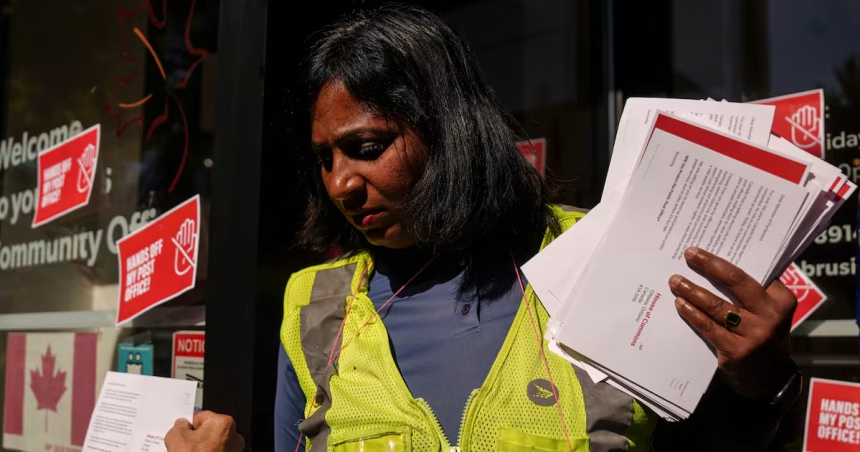
The union for striking Canada Post workers says that postal banking could be a solution to the Crown corporation’s financial woes.
But a business analyst questions the viability of the idea, saying competing with big banks would be tough.
Postal banking provides financial and banking services through a post office, according to the Canadian Union of Postal Workers (CUPW).
Ian Lee, a business professor at Carleton University, said Canada’s big banks each have billions of dollars in assets.
“We have some of the most powerful, large, successful banks on the planet,” Lee said in an interview with CTV Your Morning on Thursday.
“That’s why big American banks … have not come into Canada, because they know they will not succeed.”
Lee’s comments come as the postal service’s union several few weeks ago called on the federal government to support the creation of postal banking. The union said in a press release on Sept. 25 that postal banking has “succeeded” around the world. Postal banking has provided “needed” banking services in smaller communities, it added.
The union pointed out that the Canadian postal service used to have a national savings bank until 1969, according to a fact sheet on its website from March 2016.
Union pushes for postal bank
Canadians in urban and rural areas “desperately need an alternative to predatory payday lenders,” the union stated in its 2016 fact sheet.
But the argument of Canada having an “unserved” segment for banking isn’t strong, Lee told Your Morning on Thursday.
He said credit unions have already been filling that gap.
“So the idea that we’re going to subsidize Canada Post to put the credit unions out of business is going to produce huge blowback in all the communities across Canada that have credit unions,” he said, referring to non-profit financial institutions owned by people who bank with them.
The CUPW went on strike late last month after the federal government announced major changes intended to shore up Canada Post’s finances due to a decline in letter mail, The Canadian Press reported on Sept. 25. The changes include reducing mail delivery and closing some post offices, according to the news wire service.
The union moved to rotating strikes on Saturday. It said it made the change to minimize disruptions as it continues talks with Canada Post.
The CUPW represents 55,000 workers across the country.
Watch the video above for the full interview.
With files from CTV News’ Elianna Lev