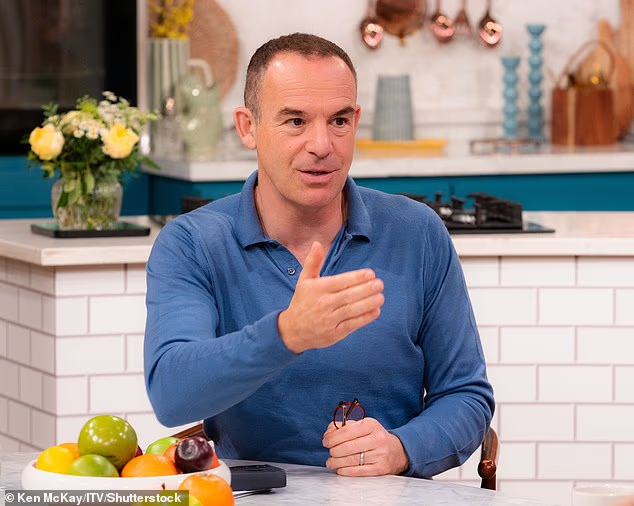
Martin Lewis said he has ‘no faith’ in social media companies after scammers posted a deepfake video of his wife being attacked by an immigrant.
The broadcaster, 53, has long vented his frustrations about the concerning rise of AI-generated images which he claims have left him ‘feeling sick’ in the past.
Deepfakes are images, pornographic or otherwise, which have been digitally manipulated, often to form scams or spread misinformation.
Lewis took to Facebook on Monday after receiving messages from ‘worried friends’ who spotted a video which appeared to show his wife Lara Lewington being beaten up.
The clip was created to promote a ‘Quantum AI‘ investment scheme which it claimed was fronted by Lewis – though this was a total hoax.
Lewis wrote: ‘If I’d thought the f*****g scammers couldn’t sink any lower – now they have done deepfake ads with a supposed video of my wife Lara Lewington being beaten up by an “immigrant” as he was refused entry to “Martin Lewis’s Quantum AI” investment scheme as it isn’t for “outsiders”.
‘We’ve had worried messages from friends. Social media firms have no problem taking money to publish these offensive, fake, organised criminals’ attempts to rip people off!’
He added: ‘Clearly if you see these please report them. Yet I have no faith in any of these firms to clear up this crap as they’re earning too much. And the implementation of the scam ads rules in the Online Safety Act keep being delayed and delayed.’

Martin Lewis says he has ‘no faith’ in social media companies after scammers posted a deepfake video featuring his wife

Lewis said the video featured his wife Lara Lewington being beaten up by an immigrant as part of an investment scheme scam
This is indeed not the first time that Lewis has been left incensed by a fake video featuring him being circulated on the internet.
In 2023, the money-saving expert was ‘frightened’ to see a likeness of himself encouraging people to sign up for what claimed to be an Elon Musk-backed investment scheme. In truth, it was a hoax.
Lewis told BBC Radio 4 at the time: ‘My name and face have been the subject of scam adverts for many years. I get countless reports every day.
‘I’ve had friends of mine get in touch with me at times saying, “Hey, I’ve just put some money in that investment scheme you’re advertising”.
‘I don’t advertise, I don’t do investment.’
There has been a worrying surge in the use of deepfake images across all social media platforms, but particularly on the Musk-owned website X.
In January, Prime Minister Keir Starmer promised to take ‘necessary measures’ against X to stop trolls using its AI tool ‘Grok’ to create manipulated images of women in bikinis and sexual explicit images of children.
Sir Keir branded Grok ‘disgusting’ while addressing backbenchers last week and said the government would ‘strengthen existing laws’ and ‘prepare for legislation if it needs to go further’.
In response, Tech Secretary Liz Kendall said the government would ban nudification tools through amendments to the Crime and Policing Bill, currently at report stage in the Lords.
It comes after the Labour government revealed that children aged under 16 could be banned from social media before the end of the year.
Starmer said the government wants to act in ‘months, not years’ last month after revealing plans for his Australian-style ban on children using social media.
The plan is due to launch this month and report back in 12 weeks’ time, allowing ministers to change the law before 2027.
‘We also need to act very quickly, not just the age concern, but on the devices and applications that make the sort of auto-scrolling, the constant gluing to the machine that you can never stop scrolling,’ the PM said.