October 28, 2025
2 min read

Key takeaways:
- Adults aged younger than 65 years with rheumatic disease were found to have high levels of financial toxicity.
- Financial strain persisted in older adults with rheumatic disease despite Medicare coverage.
CHICAGO — Chronic rheumatic diseases may impose greater long-term financial burdens than cancer, particularly for younger adults, according to data presented at ACR Convergence 2025.
“Financial toxicity is a well-recognized problem in cancer care, but its impact in chronic rheumatic diseases has received far less attention,” Manush Sondhi, MD, of the University of Washington, in Seattle, told Healio. “These conditions often require lifelong treatment, multiple medications and ongoing doctor visits. By comparing financial toxicity across rheumatic disease, cancer and their overlap, we wanted to highlight the hidden but very real economic burden our patients face, which can be just as challenging as the diseases themselves.”

To compare the financial burden experienced by adults with rheumatic disease, cancer, both or neither, Sondhi and colleagues analyzed data from the National Health Interview Survey, a nationally representative sample of U.S. adults from 2019 to 2023. The researchers identified patients’ conditions via self-report, and included those with arthritis, rheumatoid arthritis, gout, lupus or fibromyalgia and/or cancer. Meanwhile, they defined financial toxicity as one or more of the following: financial distress, difficulty paying bills, delayed or forgone care, medication non-adherence due to cost and food insecurity.
The current analysis included a total of 149,905 adults, of whom 10,094 demonstrated cancer only, 30,446 had rheumatic disease only, and 8,713 had both rheumatic disease and cancer. According to the researchers, these figures correspond to weighted U.S. prevalence estimates of 6.3%, 18.5%, and 4.7%, respectively, or approximately 80.5 million, 235.6 million, and 59.9 million adults nationwide.
The researchers used weighted logistic regressions to assess the links between disease groups and financial toxicity components, adjusting for demographics, comorbidities and insurance status. The analyses were stratified by age (patients aged older than 65 years vs. patients aged 65 years or younger) to account for baseline differences and insurance coverage.
According to the researchers, among adults aged younger than 65 years, financial toxicity was highest in those with rheumatic disease alone (63.9%) or both rheumatic disease and cancer (64.3%), compared with those without either condition (54%). Medication non-adherence was also more common among those with rheumatic diseases — 16.3% with rheumatic disease alone and 19.2% with both rheumatic disease and cancer. Compared with adults without rheumatic disease or cancer, those with rheumatic disease alone or both conditions were consistently associated with increased financial toxicity across all domains.
Among adults aged 65 years or older, 41.4% of patients with rheumatic disease alone reported financial toxicity, with financial distress highest in this group (35.1%). In addition, patients in this age group with rheumatic disease demonstrated higher odds of difficulty paying bills, cost-related medication non-adherence and food insecurity. Meanwhile, cancer alone was not associated with increased financial toxicity and appeared protective in some domains, the researchers wrote. The combined burden of both rheumatic disease and cancer imparted a similar risk as rheumatic disease alone.
“Our findings suggest that rheumatic disease drives financial toxicity more than cancer in younger adults, and continues to burden older adults despite Medicare,” Sondhi said. “Unlike cancer’s short-term costs, rheumatic diseases bring lifelong expenses from medications and monitoring. Even when cancer coexists, the burden mirrors rheumatic disease alone, showing it’s the main driver.
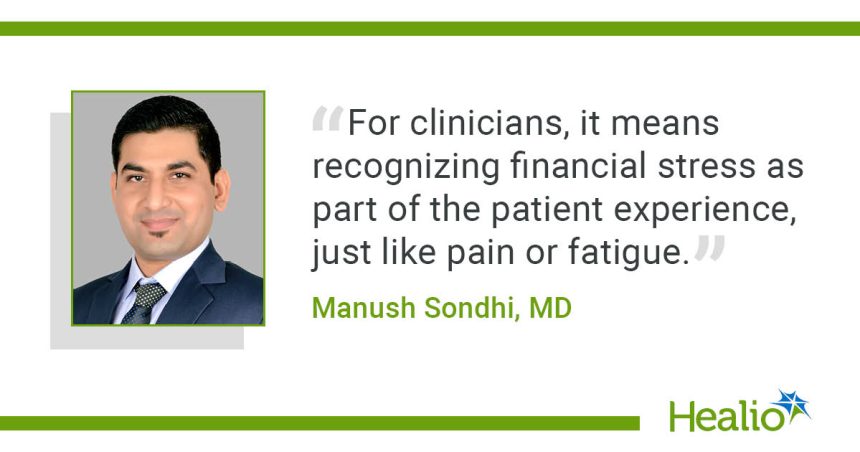
“This underscores the need for rheumatic disease-specific tools,” he added. “For clinicians, it means recognizing financial stress as part of the patient experience, just like pain or fatigue. Addressing these barriers is critical to improving adherence, outcomes, and quality of life in people living with rheumatic disease.”
For more information:
Manush Sondhi, MD, can be reached at manushsondhi@gmail.com.
Sources/Disclosures
Source:
Sondhi M. Abstract 2615. Presented at: ACR Convergence 2025; Oct. 24-29, 2024; Chicago.
Disclosures:
Sondhi reports no relevant financial disclosures.