
Traditionally one of the stock market’s quieter, steadier sectors, healthcare companies used to be regarded as essential, defensive and rarely exciting.
But the confluence of artificial intelligence, biotechnology, an ageing global population and Covid-19 has turned healthcare into one of the decade’s most closely watched industries.
What started as pandemic-era crisis management for hospitals and technology firms has morphed into a lasting shift. Remote consultations are normal, diagnostics are online and machine learning guides everything from lab tests to logistics to AI-assisted imaging.

Now, with the world’s leading economies having found their post-pandemic footing, investors are returning to healthcare not for shelter but for growth. Long seen as a fiscal burden, healthcare is being reframed as an industry targeting efficiency, innovation and ultimately, profit. It sits at the junction of science, data and human need – an area that rewards patience and discipline over speed.
For many investors, that intersection points towards the mid-cap segment of the market. Defined by investment bank Saxo as companies with valuations of US$2 billion-10 billion, this segment is home to many of the most dynamic healthcare and technology firms, and is one where growth feels tangible and valuations remain grounded.
“Global equity performance has become so concentrated in a handful of mega-cap names that allocators are looking for better ways to diversify risk,” says Tim Murphy, head of research at Genium Investment Partners. “Mid-caps – and increasingly health-related innovators within that space – are becoming a more regular allocation in portfolios.”
Murphy says the appeal lies in both growth potential and valuation discipline. “From a valuation perspective, global mid-caps are sitting at much lower levels than large caps at this point in the cycle,” he explains. “Paying lower prices for quality businesses tends to lead to better long-term outcomes than paying higher prices for growth that’s already been priced in.”
While investors like Murphy see mid-caps as the natural home for the next phase of healthcare growth, others are focusing on qualities that define the long-term winners within it.
James Abela, portfolio manager of the Fidelity Global Future Leaders Fund, says his team has focused less on trading through short-term volatility and more on identifying sustainable growth drivers. “We tend to be three-to-five-year focused,” Abela explains. “One-year, big-noise incidents like tariffs or politics haven’t really affected our long-term views.”
Within healthcare, he adds, “it’s really medtech that does well as a future leader. Medical services tend to be heavily regulated; medtech has been the stronger space for us.”
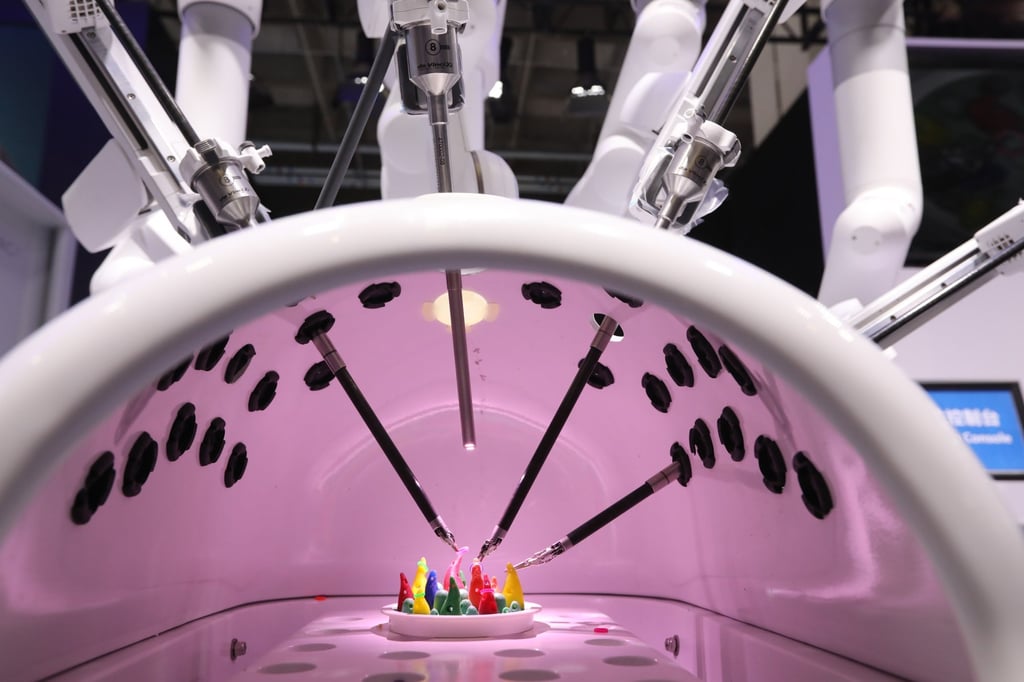
Whether in surgical robotics, digital testing or continuous patient monitoring, these businesses are becoming central to modern healthcare. Their growth stems from ageing demographics and better data infrastructure, with recurring revenues that support consistent returns.
Abela says his team evaluates potential “future leaders” according to three filters: viability, sustainability and credibility. “It’s about the level of returns, the direction of those returns and how long you can hold [the investments],” he explains. “Then you ask whether management and accounts can be trusted. When all four line up, you’re looking at a very good business.”
That philosophy guides his firm’s search for what he calls “quality compounders”, and for cyclical recovery stories – businesses capable of sustaining their performance through ever-changeable market conditions.
Murphy also emphasises the power of compounders over spectacle. “Sometimes the most successful investments are in operators that have found their niche, doing it well, earning good margins and delivering solid returns to shareholders,” he says. “They might not get the headlines of the racier tech names, but they compound steadily over time.”
It’s this combination of durability and innovation that has appealed to wealth managers. The healthtech story, they say, is one of progress measured in years, not quarters.

While the sector’s growth prospects are clear, its complexities are formidable and challenges remain: long R&D pipelines, heavy compliance burdens and ethical scrutiny over data use and AI-assisted decision-making.
Abela says diversification is the most effective safeguard. “You need a blend – quality, value, transition and momentum,” he says. “It keeps the portfolio balanced at the company and overall risk level.” That philosophy, he adds, helps mitigate volatility when sentiment towards high growth within healthtech sectors inevitably shifts.
Wealth managers, meanwhile, are exploring a broader range of access points – from healthcare-focused exchange-traded funds and listed innovators to private-market opportunities in digital health, senior care technology and health infrastructure.
The unifying thread has been the recognition that healthcare’s digital transformation has become an enduring story, not just a fleeting moment.
KPMG’s latest “Global Tech Report 2024: Healthcare Insights” corroborates this, indicating that 70 per cent of healthcare executives said they were satisfied with the value derived from their technology investments – a marked improvement on pre-pandemic levels.
Nearly half reported adopting integrated development-and-security frameworks – known as DevSecOps – to accelerate innovation while safeguarding sensitive health data, and almost six in 10 expected AI to deliver significant operational efficiencies within three years.
KPMG described the sector as “balancing speed, security and value”, as organisations race to digitise operations and patient engagement.
Despite this, the report also pointed out that healthcare firms were less likely than other industries to target their technology budgets towards the day-to-day problems faced by patients and staff.
It’s really medtech that does well as a future leader. Medical services tend to be heavily regulated; medtech has been the stronger space for us
Much of the investment still goes into back-end systems, compliance and infrastructure rather than improving the user experience. That gap, KPMG suggested, leaves both inefficiencies and opportunities: space for companies that can translate innovation into practical, patient-centred outcomes.
For investors, those findings indicate a sector that is still evolving. The digital reinvention of healthcare is happening quickly, but not evenly. Companies that can turn innovation into measurable outcomes are likely to attract both patients and capital.
In Asia, the combination of demographics and policy support adds another layer of momentum. Ageing populations, rising healthcare expenditure and deepening venture ecosystems in Singapore, Japan and Australia have been generating regional deal flow.
Murphy expects that “the valuation gap between mid- and large-caps will narrow over the next five years” as investors reward consistent earners over speculative growth.
However, Abela observes, even transformative technologies must meet the conditions that growth is viable, sustainable and credible.
For investors and their advisers, the task will be to capture the pulse of innovation while staying disciplined. Those who manage both may find that the real prescription for long-term returns lies not in chasing breakthroughs but in holding steady as the market itself evolves around them.