There seem to be many who would rather it was all going horribly wrong, so they could point their fingers and declare, for political reasons, that Scotland is some kind of basket case and that it is all the SNP’s fault.
If anyone thinks this statement is overdone, they might want to contemplate the horrified glee with which the cost overruns and huge delays on the two ferries which Port Glasgow shipbuilder Ferguson Marine has been building for CalMac have been greeted.
That is not a reference to people on Arran or others actually affected by the knock-on disruption to ferry services which has resulted from these delays – they are perfectly entitled to make their viewpoints known. Rather, it is a reference to those who are not affected directly but seem compelled to carp from the sidelines, at great volume and with spectacular frequency and on occasion pomposity.
The cost overruns and delays on this contract for the Glen Sannox and Glen Rosa, awarded by Caledonian Maritime Assets Limited and lamentably complicated by what seemed like an unnecessary requirement for dual-fuel vessels operating on marine diesel and liquefied natural gas, have been far from ideal, to put it mildly.
However, in the political fishbowl that is Scotland, it would be good if the carping were proportionate.
Scotland’s continuing strong performance in financial services foreign direct investment (FDI) was revealed in figures published by accountancy firm EY on Monday.
These showed Scotland, as well as remaining second only to London as a destination for financial services FDI in the UK last year, also achieved a decade-high for the number of such projects won.
The EY figures show Scotland attracted 11 financial services FDI projects in 2024, up from nine in the previous year.
This advance was achieved in spite of a sharp fall in the overall number of financial services FDI projects won by the UK in 2024.
EY’s figures show Edinburgh, with the six financial services FDI projects it attracted last year, was the joint-top city outside London for such wins, alongside Manchester.
London attracted 39 financial services FDI projects in 2024.
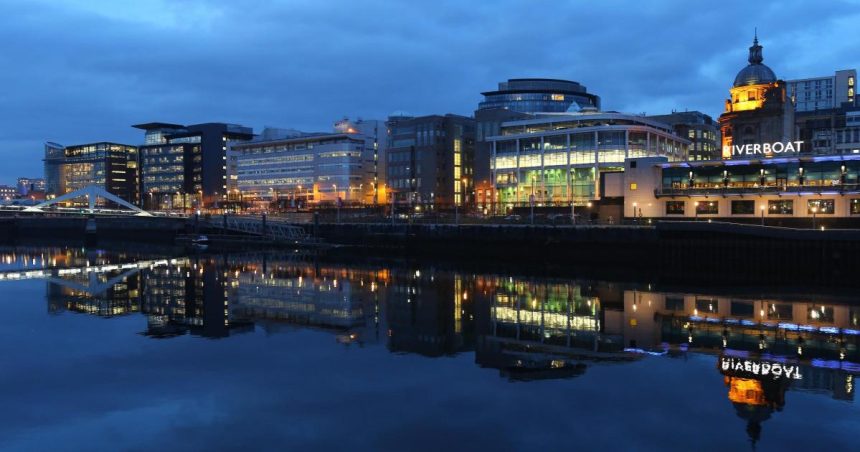
Glasgow earlier this year climbed further in a closely watched league table of global financial centres.
The city rose by five places to 32nd spot in the latest twice-yearly Z/Yen Global Financial Centres Index, published in March. In September 2023, Glasgow was in 51st spot, before climbing to 42nd place in March 2024 and then 37th place in September last year.
Edinburgh’s position was, at 29th in the latest rankings, unchanged from September 2024 when it climbed to its current position from 33rd. However, while its league placing was unchanged in the latest index, the Scottish capital’s overall score improved.
The EY figures published this week show the US continues to be the top source of financial services FDI for Scotland, accounting for five such projects in 2024.
And the US has been the source of 38 financial services inward investment projects for Scotland over the last decade, EY noted.
Meanwhile, the accountancy firm highlighted an important sign of strength in financial services FDI in Scotland overall last year, in terms of overseas companies already operating here deciding to invest further in the nation.
Sue Dawe, EY’s Scotland managing partner for financial services, said: “We continue to see Scotland perform well in attracting financial services FDI projects. In 2024, we saw almost as many projects expanding existing operations as we did brand new projects – which is a great indication that these companies view Scotland as a viable proposition to continue investing in.”
The UK attracted 73 financial services FDI projects last year, down from 108 in 2023.
This is a sharp drop, making it all the more impressive that Scotland managed to buck this downward trend at a UK level.
However, EY noted: “The UK continues to be Europe’s most attractive location for financial services FDI with total project numbers across Europe falling 11% year on year – from 329 projects in 2023 to 293 projects in 2024.”
Read more
It added: “The UK’s 73 financial services projects is more than double second-placed Germany, which recorded 32 projects – a 16% decline from 38 in 2023. France fell to third position with 30 projects in 2024 – a 23% decline from 39 projects in 2023.”
EY highlighted the importance of Scotland continuing to work hard to secure financial services FDI, given the fall in the number of projects attracted by the UK overall last year.
Ms Dawe said: “While the UK continues to be Europe’s top financial service FDI location, the fall in overall investment that was recorded at both those levels [tells] us that we cannot take the foot off the [pedal]. If Scotland is to remain an attractive place for companies within an increasingly competitive market, then we need to dial up what we do well – working together across sector, government and education – and not shy away from challenges on the horizon.”
She added: “Financial services isn’t simply one of Scotland’s growth sectors – it’s the growth sector that enables other growth sectors; so, if we get this right and continue to be the most attractive place to establish financial services operations outside London, the Scottish economy as a whole will benefit. We’ve already demonstrated what can be achieved when we work together – this should be no different.”
There is clearly much to continue to strive for in this arena, building on impressive successes to date.
Sandy Begbie, chief executive of industry body Scottish Financial Enterprise, said: “EY’s latest attractiveness survey demonstrates the continued strength and attractiveness of Scotland’s world-class financial services industry, based on the depth, breadth and maturity of our ecosystem, the quality of our universities and skills pipeline, and the leadership we are showing in priority areas like data, AI (artificial intelligence) and green finance.”
Mr Begbie underlined the potential to build further on Scotland’s success in this key area.
He said: “We believe there is even greater potential for progress – particularly by taking advantage of global trends around near-shoring and the establishment of large regional hubs – and have redoubled our efforts to promote Scotland as a good place to invest.”
Commenting on the EY figures, Mr Begbie observed “these results also show that we are operating in an increasingly competitive marketplace and, if we want to retain our strong reputation internationally, there is no room for complacency”.
He declared that it is “vital that industry and government work closely and constructively to further build upon our longstanding reputation as a good place to do business, attract further inward investment and create new high-value jobs that benefit everyone in Scotland”.
The numbers for financial services FDI in recent times suggest that, in highly competitive global conditions, the sector in Scotland, as well as government and educational institutions, are doing a great job in working together to attract high-value activity to the nation.
Those who like for their own political ends to try to paint a picture of the Scottish Government not doing well on the economy might want to reflect on that. However, they probably will not.