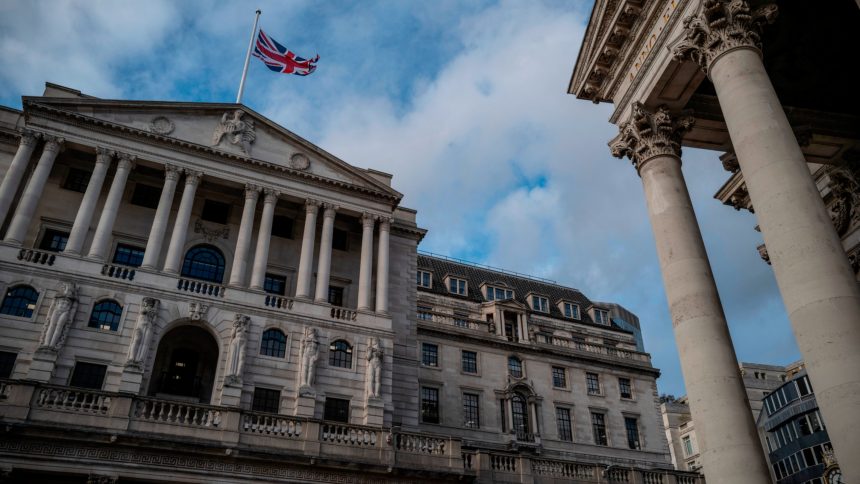
Over a third (36 per cent) of consumers feel negative towards a potential cut in the Bank of England base rate, research from Moneyfacts has revealed.
Despite a cut of 0.25 per cent to the base rate in August, fixed mortgage rates subsequently went up rather than down as lenders increased rates during September.
Due to falling swap rates in October, fixed mortgage rates have dipped back down, but Moneyfacts suggested that such volatility shows how sensitive the mortgage market is surrounding economic uncertainty.
The Moneyfacts Average Mortgage rate has fallen by just 0.05 per cent in three months.
Moneyfacts finance expert, Rachel Springall, said: “Dividing thoughts among consumers on further cuts to the Bank of England base rate is understandable.
“Borrowers may expect cheaper mortgage rates as a result, which is not guaranteed, and savers end up hit the hardest.
“Savers are already seeing negative returns on their hard-earned cash if it’s stashed in a pot they can quickly access, so it’s no wonder if they feel demoralised.”
However, Springall cautioned that, even if cash savings rates dwindle, it will not get people to invest if their core reason for saving is to feel financially secure.
“This couples up with the sentiment to save with an existing bank, and indeed choosing a cash Isa instead of a stocks-and-shares Isa,” she continued.
“Cutting the cash Isa allowance would therefore be an awful decision for savers, but it could also cause havoc in the mortgage market, as it would reduce funding for loans.”
Additionally, Moneyfacts revealed that real returns on variable rate savings accounts continue to deteriorate, with easy access, notice, and cash Isa equivalents paying less than 3.8 per cent.
Meanwhile, less than a third (23 per cent) of consumers were found to keep their savings in a stocks-and-shares Isa, compared to 44 per cent in a cash Isa.
As more than half of consumers (55 per cent) save to feel financially secure, they are unlikely to be willing to risk their cash by investing.
However, Moneyfacts warned that savers may be getting a poor return as 35 per cent choose a savings account with the provider they bank with, such as high street banks.
tom.dunstan@ft.com
What’s your view?
Have your say in the comments section below or email us: ftadviser.newsdesk@ft.com