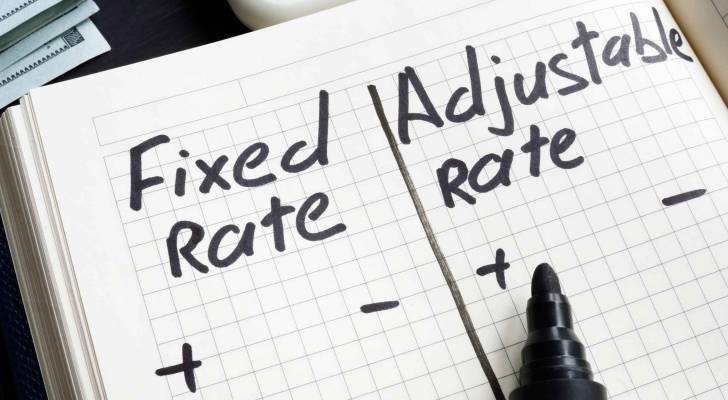
You can choose from several types of mortgage loans when purchasing or refinancing a home. Though the majority of buyers opt for the traditional fixed-rate mortgage, it’s not the right choice for everyone.
In some cases, an adjustable-rate mortgage — also known as an ARM or a variable-rate loan — might be a better choice. Let’s dive into the ARM-versus-fixed-rate debate and look at the situations each type of home loan is best suited for.
Fixed-rate versus variable-rate mortgages all come down to the interest rate — namely, how permanent it is.
For some buyers, a consistent interest rate is the best option for their long-term goals and finances. For others, an evolving rate can be the better choice. It depends on your finances, outlook on the economy, and your current and future plans as a homeowner.
A fixed interest rate mortgage comes with an established rate you’ll keep for the entire mortgage term. In most cases, repayment on these loans lasts for 15 or 30 years. That means for a 15- or 30-year mortgage, you’ll pay the same monthly payment.
Fixed-rate mortgages provide consistency for home buyers and make budgeting for housing costs easy. They are also low-risk, as your rate can’t rise — no matter what’s going on in the market.
Pros
-
Interest rates and payments remain consistent for the full loan term.
-
Easy to budget and plan for.
-
Rarely come with prepayment penalties.
-
Offer peace of mind and stability.
Cons
-
Rates are usually higher than ARMs (at least as the beginning of the loan term).
-
Don’t take advantage of lower interest rates in the market.
-
May take longer to pay off (you’re primarily making only interest payments at the start).
An adjustable-rate mortgage, also called a variable rate loan or ARM, comes with an interest rate that can change over time.
You’ll usually get a low rate for the first few years of the loan — typically three, five, seven or 10 years. After that, your rate can change based on the market rate, including going up if interest rates rise.
Because interest rates on ARMs can change, so can your mortgage payments, making them hard to predict and budget for long term.
Fortunately, most lenders cap rates, which can protect you from jumps in payments. These caps limit how many times your rate can increase over the life of the loan and by how much.
Pros
-
Low upfront interest rates and payments at the start of the loan term.
-
Less paid in interest if you sell your house or refinance before the fixed-rate period is up.
-
Often come with an interest rate cap.
-
Payments could decrease if the index rate drops.
Cons
-
No consistency or predictability in payments.
-
Interest rates and payments can increase over time.
-
Usually come with a prepayment penalty if you want to sell your house or refinance your loan early.
-
Low interest rate lasts only a few years (10 years max).
Variable-rate loan options are described with two numbers: 5/1, 10/1, etc. The first number indicates the introductory period—the number of years you get to keep the fixed, low interest rate. The second number indicates how frequently your interest rate can adjust each year after that.
The most common options include the 3/1 ARM, 5/1 ARM, 7/1 ARM, and 10/1 ARM.
Lenders may offer other term options, including a 15/15 ARM, which has a fixed rate for 15 years, and a singular, adjusted rate for 15 years after that.
There’s no clear winner between fixed-rate versus ARM loans. It depends on your finances, the economy, your goals, and other personal factors.
You plan to stay in the home permanently and want a predictable budget. Fixed-rate mortgages are generally best if you plan to stay in your home for the long haul.
Because they’re predictable, they’re also a particularly good choice if you’re on a limited income, a tight budget, or have unpredictable employment. If you know you can’t afford more than the initial interest rate and payment your lender has quoted, a fixed-rate mortgage is probably your best bet.
You expect market rates to increase over the long term. Economically, fixed-rate loans are also best in a rising-interest-rate environment, so if increasing rates are on the horizon, a fixed-rate mortgage could safeguard your finances.
You plan to move. Variable-rate mortgages are best if you only plan to stay in your home for a short period—about as long as or less than the fixed-rate period on your ARM. This allows you to take advantage of the low introductory rate without risking adjustments.
Just be sure to check if your loan agreement includes prepayment penalties if you decide to sell your home before the loan is paid off.
You expect your credit or finances to improve in the future. Adjustable-rate loans can also be a good choice if you expect your finances to improve over time; for example, if you’re a first-time home buyer and early in your career.
Increased income could mean you can handle higher payments down the line, and an improved credit score could let you refinance to a new loan before the fixed rate expires.
You expect market rates to decline. Finally, an ARM could be smart if you expect that mortgage rates will decline over time. If borrowing becomes cheaper in the years to come, a variable rate could be in your favor.
Remember, though, this could be five years or 10 years down the line, so predicting rates this far out will be difficult.
If you’re deciding between an ARM versus fixed-rate mortgage, take time to assess your current and expected future financial situation as well as your long-term goals. Once you have a clearer picture of your journey as a homeowner, the right choice should emerge.
Regardless of which option you choose to pursue, remember to compare rates from at least a few of the best mortgage lenders before purchasing your home. Rates and terms vary significantly among lenders, and getting a few extra quotes can save you significantly over the long run.
The post ARM vs. Fixed-Rate Mortgage: What’s the Difference & Which Is Right for You? appeared first on LendEDU.