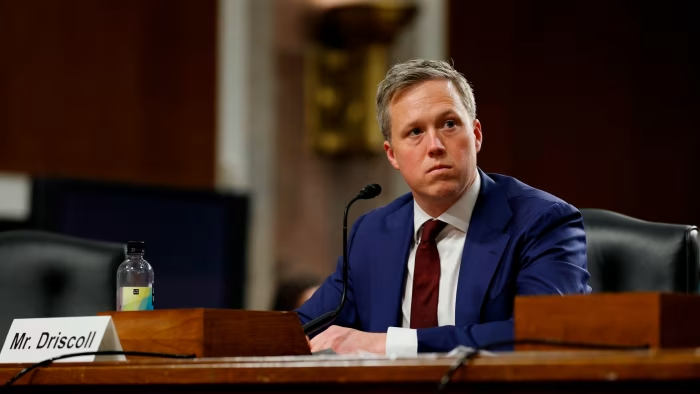
While Daniel Driscoll, the US army secretary, sees the private equity industry as a source of billions of dollars to fund infrastructure, such an approach could pose grave national security risks (“US army enlists buyout firms in drive to fund $150bn overhaul of equipment”, Report, October 22).
There are well documented cases of foreign adversaries and corrupt oligarchs laundering their money through private investment vehicles. Last year, the US Treasury’s “investment adviser risk assessment” said that “investment advisers and the private funds they advise have served as an important entry point into the US financial system for wealthy Russians seeking to obscure their ownership of US assets” and that China and other adversaries have used these pathways “to access certain technology and services with long-term national security implications”.
Unlike banks and other financial institutions, the private investment industry is currently the only major US capital market actor without a legal obligation to implement anti-money laundering and combating the financing of terrorism programmes.
Last year, the Treasury department issued final rules to fix this problem. But earlier this year, the Treasury proposed delaying these regulations by two years and potentially watering them down.
Considering the army’s recruitment of private equity firms as investment partners, the Treasury department should not stall safeguards that would make it harder for our adversaries to evade sanctions and spy on our nation’s defence technology.
Delaying these rules will put Americans and our national security at risk.
Ian Gary
Executive Director, Financial Accountability and Corporate Transparency (FACT) Coalition, Washington, DC, US