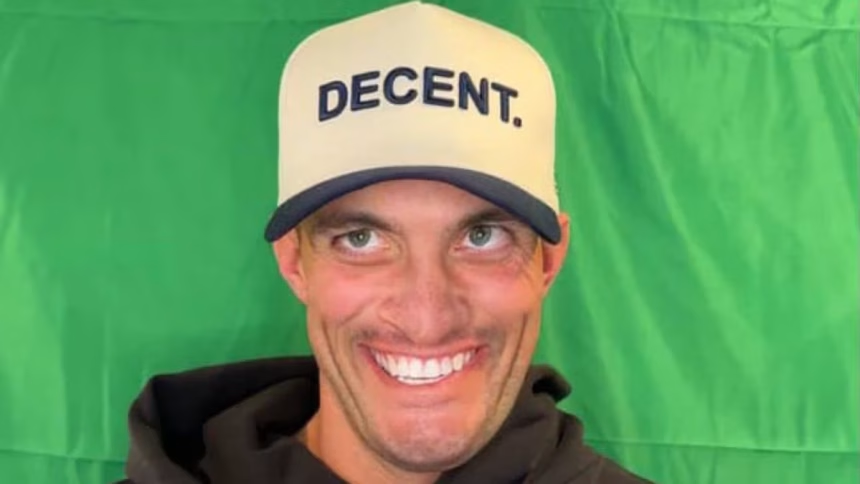
What started as a funny online experiment has now turned into a full-blown career for Johnny Hilbrant and his alter ego, “PE Guy”: a parody of private equity culture, where he mimics the tone, lifestyle, and mindset of finance professionals, often poking fun at how seriously they take themselves. And in his own words, the growth has been nothing short of “substantial.”
In just about a year, the character has become a real money-making machine, one that Hilbrant himself says even “PE Guy” might want to invest in. Speaking to Business Insider, Hibrant revealed earning over $1 million in the past year alone.
From a joke to a million-dollar character: The story of “PE Guy”
Hilbrant says he created the character in March last year “just for fun”. At first, he was only posting around two videos a week and had no real plan to monetize it. That changed in May when he received his first brand deal.
“I turned to ChatGPT to ask how much I could charge based on my social platform, shared that number with the brand and they agreed,” he explained. Once that first deal landed, more companies started reaching out.
Soon after, his content picked up pace, and viewers began asking if he was on Cameo. He wasn’t at the time, so he asked followers to send what they felt was a fair price for personalised videos.
People sent between $200 and $400 per video. “That’s when I realised, ‘Wow, there’s a market for this,’” he told Business Insider. Not long after, Cameo contacted him directly. Since then, he has completed nearly 1,200 personalised videos and Cameo requests in a year.
A business that grew faster than expected
What surprised him most was how quickly success followed. “I’ve made over $1 million in revenue in the last year, with the amount I make growing almost every month,” Hilbrant said. His inbox also changed overnight, from about one email a day to nearly 20 emails daily, filled with brand inquiries and collaboration offers.
Brand deals remain his biggest source of income, but they are no longer the only one. He has worked with B2B software companies and fintech firm, even taking part in a viral campaign where he interviewed “The Office” star Brian Baumgartner, who played Kevin.
He has also partnered with several consumer brands. In most cases, companies reach out directly after discovering his character and want quick turnarounds, sometimes from the first message to the final post in under a week.
He also earns from live appearances at financial events. Some of these events involve private equity firms or companies linked to the industry. Many of them include NDAs, especially since the content often makes fun of the private equity world.
Despite the growth, Hilbrant has chosen to stay in control of his work. He says he received offers from managers who wanted up to a 40% cut, which made him uncomfortable. “I decided to manage myself, and was like, ‘Thanks, I’ll just use ChatGPT as a manager,’” he told Business Insider.
For him, control matters more than anything. “PE Guy is kind of my baby, and I don’t want to give up control. I don’t want someone telling me which videos to do or writing scripts for me. It’s my voice,” he said. He does not use AI to write scripts, but he does use it for administrative work like emails, outreach, and accounting tasks.
Before PE Guy took off, Hilbrant was working in the fitness industry for about 10 years. At 36, he decided it was time for something new. He currently has over 300,000 followers, and while he accepts that things can change, he believes the character has already built enough momentum to evolve rather than disappear.
Why the creator economy’s biggest winners are specialists, not stars
But PE Guy is not just a one-off internet success story. It also quietly fits into a much bigger shift happening online: the rise of the creator economy.
The global creator economy is now worth around $250 billion and is expected to nearly double to $500 billion by 2027, growing at about 26% every year, according to Uscreen, 2026.
What is changing is not just the size of the industry, but how it works. The focus is moving away from big general influencers and shifting towards very specific niche creators who speak to smaller, sharper audiences.
Research shows nearly 48% of brands now say they get the best results from micro-creators, even though 81% of brands still tend to chase big names and massive reach instead of relevance, according to Net Influencer / Creator Economy in Review.
Within this shift, finance content sits in a very high-value space. It is serious, targeted, and closely watched by brands. On platforms like TikTok, finance creators can earn anywhere between $5,000 and $50,000 or more for a single sponsored post, depending on reach and engagement, according to InfluenceFlow, TikTok Creator Earnings by Niche 2026.
By 2026, many top creators are expected to run businesses with multiple income streams, from brand deals and content monetisation to licensing, live events, and even equity partnerships. In simple terms, brands are no longer just paying for a shoutout; they are entering long-term partnerships.