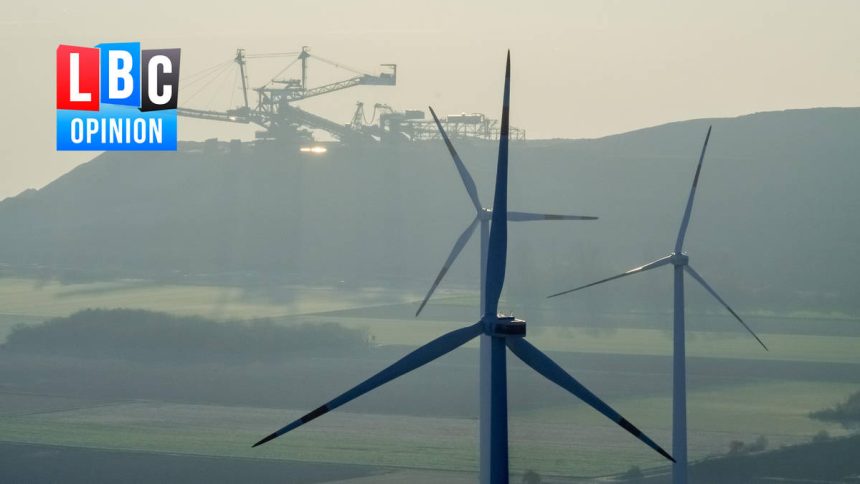
There’s a direct relationship between economic growth and energy abundance – which has previously relied on burning fossil fuels. Their era of dominance, however, is ending – not only as we finally grasp the impact they have on our climate, but also from the economics of the alternatives.
Renewables are cheaper, more abundant and geopolitically secure. This position is not ideological; it’s simple maths.
Let’s start with the basics: renewables are the cheapest form of electricity available. In the UK, the cost of utility-scale solar and wind is around $0.04 per kWh – while gas is $0.08 and coal around $0.12.
According to the International Renewable Energy Agency (IRENA), the cost of solar power has fallen by over 80% since 2010, while onshore wind costs have dropped by about 60%.
This means it’s now cheaper to build renewables than to continue operating an existing coal or gas plant in many parts of the world – let alone build new ones (which takes years).
Investment flows where the greatest opportunity lies. In 2024, global investment in clean energy topped $2 trillion according to the IEA, compared with $1 trillion for fossil fuels.
This had led to a new milestone; renewables generated more electricity than coal for the first time ever in the first six months of 2025.
A major reason for this is that fossil fuels are not stable nor quick to ‘turn on’. Oil prices peaked above $120 per barrel in 2022 and fell to below $80 in 2024.
Further, with overstretched supply chains for gas turbines not able to deliver new energy for five to seven years, investors need solutions that can meet today’s demand.
Such volatility makes it difficult for companies and policymakers to plan for the future – and the impact is passed onto everyday people through squeezed supplies and price increases.
Energy security is another major concern. The war in Ukraine, for example, sent the prices of natural gas – which was for a long time one of the most reliable sources of energy – soaring. Inflation spiked worldwide, exposing a common vulnerability to energy imports.
Renewables, by contrast, bring energy generation home. Every solar panel, wind turbine and geothermal well adds to a country’s energy independence and shields consumers from global price shocks and dependency on foreign actors.
Issues remain of course – with our electricity grids sometimes struggling to keep up with growing distributed energy systems. More energy is being produced in smaller amounts but in many more locations – compared to fossil fuels, where generation is much more concentrated.
Our new energy systems will need to grow smarter – optimising the demand and storage of electricity, and even allowing for the sale of consumers’ energy back to the grid.
We need to retire the outdated trope that going green comes with financial penalties. A fossil-free economy is a massive economic opportunity, and neither our economy nor our climate can afford to stick with coal, oil or gas.
__________________________
Peter Hirsch is the Head of Sustainability at venture capital firm 2150 – investing in early stage climate technologies.
LBC Opinion provides a platform for diverse opinions on current affairs and matters of public interest.
The views expressed are those of the authors and do not necessarily reflect the official LBC position.
To contact us email opinion@lbc.co.uk