House hunters, there’s a flicker of hope on the horizon. After years of relentless price growth, Australia’s white-hot property market is finally cooling off. According to Domain’s June Quarterly House Price Report, both house and unit prices have recorded their first quarterly price decline in more than three years.
Across the combined capital cities, house prices fell 1.4 per cent (-$17,489) and unit prices dropped 1.2 per cent (-$8,631) over the June quarter, ending the longest uninterrupted run of quarterly growth since 2012-15.
Sydney is leading the downturn, with house prices dropping 3.3 per cent – their first step backwards since 2022. That’s a drop of almost $60,000 in just three months, bringing the median house price to (a still eye-watering) $1.73 million. Sydney units also slipped 1.5 per cent, marking their first quarterly price fall in two years.
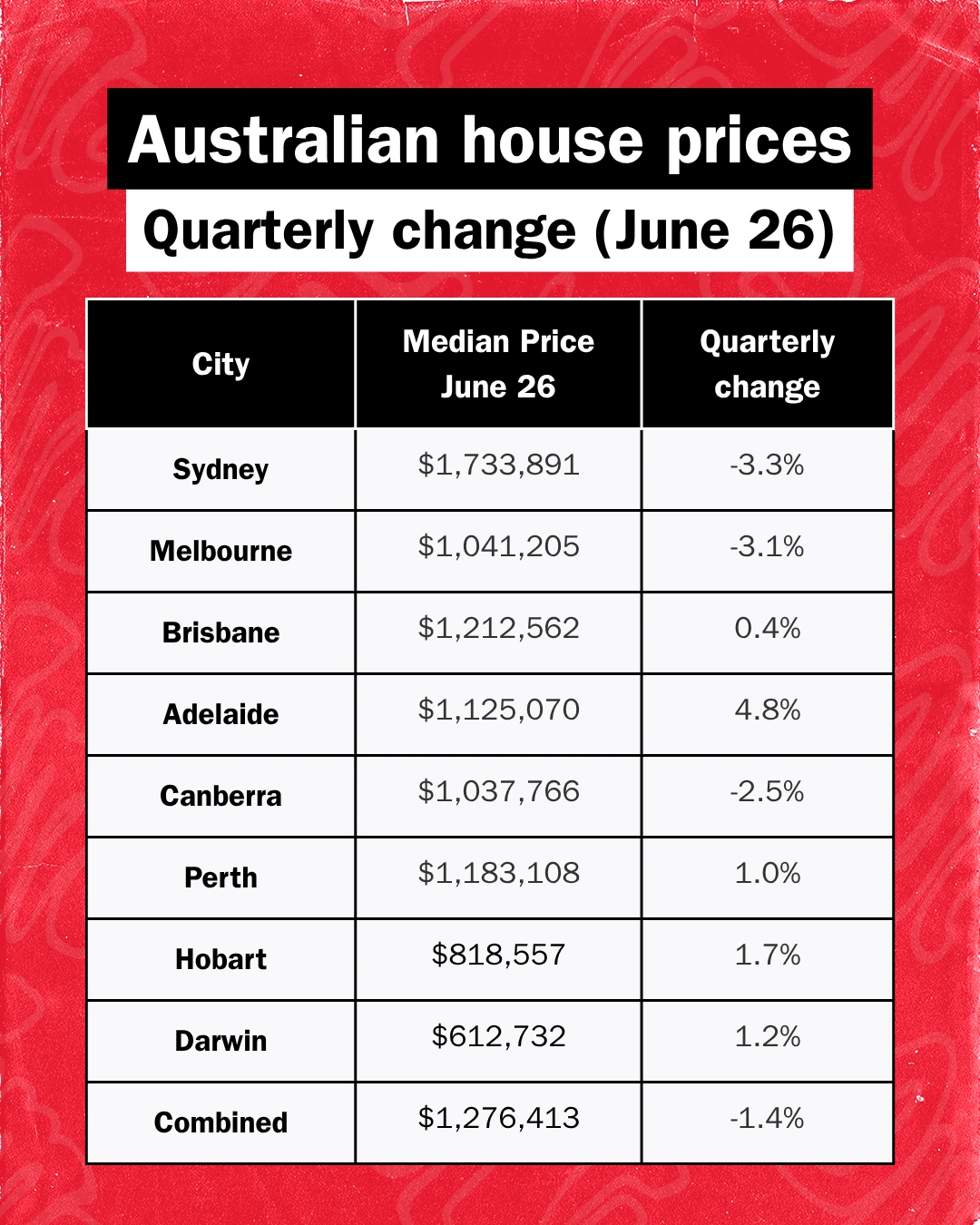
Melbourne wasn’t far behind Sydney, with house prices falling 3.1 per cent (-$33,381) in the city’s steepest quarterly decline in almost four years. Canberra also recorded price drops across both houses and units, while Brisbane and Perth managed modest quarterly house price growth.
The surprise standout? Adelaide. House prices here jumped 4.8 per cent in just three months, pushing the South Australian capital past Melbourne to become the nation’s fourth-most expensive city for houses, with a median price of $1.125 million. Meanwhile, Perth continues to post the strongest annual growth nationally, with house prices up 22.5 per cent year-on-year – although its rapid growth has started to slow.
The report also found Australia’s unit market has lost momentum, with prices falling in every capital city except Darwin, where unit values climbed five per cent over the quarter.
According to Domain’s Chief of Research and Economics, Dr Nicola Powell, the latest figures mark a clear turning point.
“Three months of data confirm that higher interest rates, affordability pressures and weaker confidence are changing buyer behaviour and bringing the broad-based growth cycle to an end,” Powell said.
She added that affordability is now the biggest force shaping the market, with buyers becoming increasingly selective. Nationally, listings are rising, homes are taking longer to sell and buyers are gaining more negotiating power than they’ve had in several years. Auction clearance rates have also fallen to their lowest level since April 2020, while more vendors are withdrawing properties as they adjust expectations.
Want more intel? You can check out the full report over here.