I recently spent some time in Australia. While learning about the local real estate market, the thing that left the strongest impression on me was not the story of “prices rising, which is amazing.”
I felt that the Australian real estate market is an extremely rational one, where population trends, urban planning, tax systems, and financial regulations are intricately intertwined. And behind that, there was a major lesson for me: that the design of how taxes are collected differs completely from country to country.
This article is intended for business owners and investors who already possess a certain scale of assets. Please read this not as an article recommending the purchase of overseas real estate, but as an article for thinking about “how to read where your own country’s tax system is heading.”
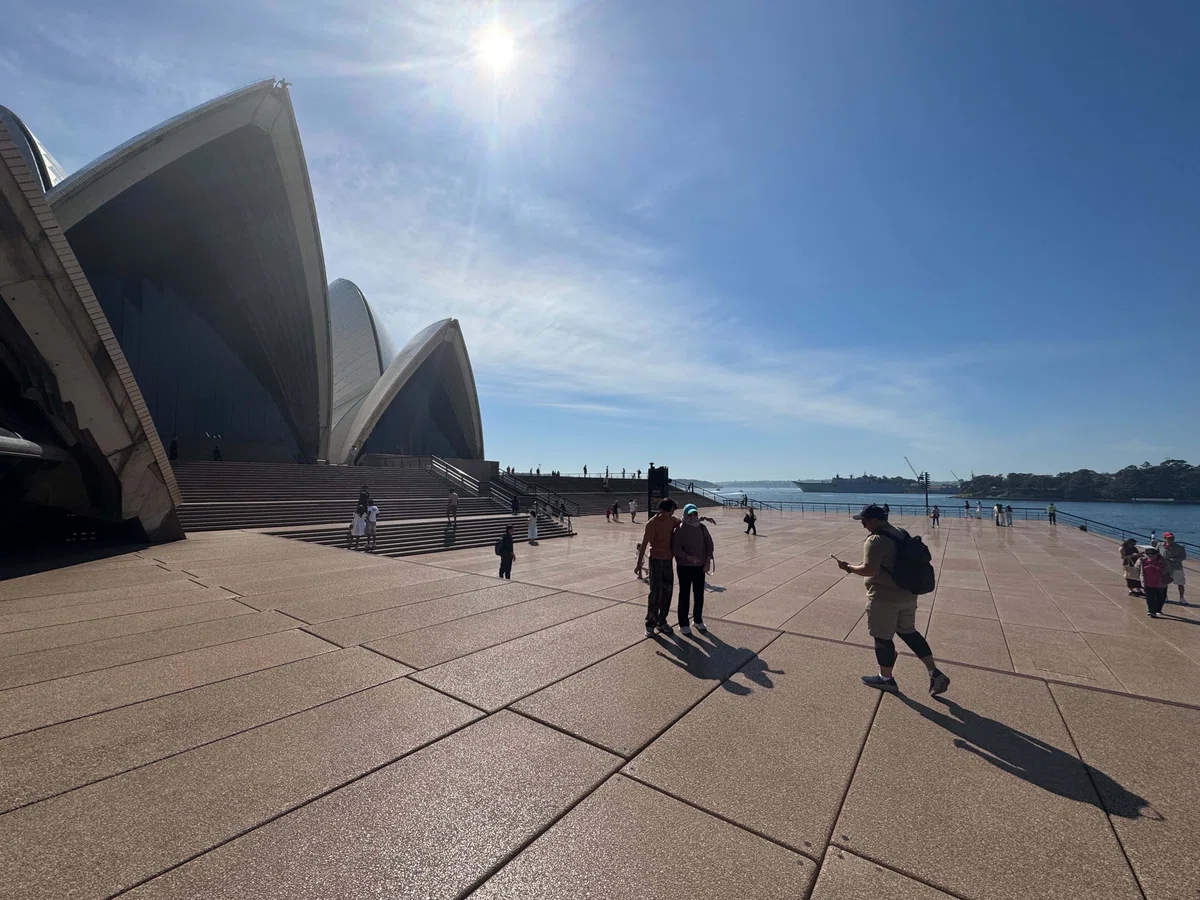

Three structures supporting Australian real estate
1. The population continues to grow
Australia is a country that has accepted many immigrants (in recent years, it has managed numbers by setting caps on international students, etc.). According to the Australian Bureau of Statistics (ABS), the population as of the end of March 2026 was approximately 27.9 million, an increase of 1.4% (about 390,000) from the previous year.
Of that, net overseas migration was about 290,000, and natural increase (births minus deaths) was about 100,000. The foundation for housing demand is completely different from that of Japan, where the population is shrinking.
2. Housing is difficult to build
Even if there is demand, new construction cannot keep up. I heard that locally, the soaring cost of building materials, a shortage of skilled workers (people are flowing into mining and large-scale infrastructure projects), the bankruptcy of construction companies, and delays in local government permits are all compounding.
Why are local government building permits slow?
One of the biggest bottlenecks to building new homes in Australia is the delay in administrative permits.
・A serious shortage of town planners (reviewers).
・The strength of NIMBY (Not In My Backyard) movements: Elected local councilors take into account petitions from existing residents against sunlight, scenery, and traffic congestion, and delay the review process.
・Strict environmental and safety standards: Extensive survey reports on flood risk, forest fires, tree protection, etc., are mandatory.
What surprised me was the permit system. In Japan, it is a “standard-compliant type” where approval is granted if numerical criteria are met, but in Australia, it is a “discretionary type” where the local government judges each case individually, and there are many cases where public comments from residents are required. I learned that due to a shortage of reviewers and neighborhood opposition, it is not uncommon for a single case to take from several months to over a year.
“Construction costs don’t go down -> new homes aren’t built -> existing home prices rise.” My realization is that the structure I talk about in Japan is happening even more strongly in Australia.
3. A system that is easy for investors to invest in (though reviews are underway)
In Japan, tenants are strongly protected by the Act on Land and Building Leases, and landlords need “just cause” to refuse a lease renewal. On the other hand, I learned that Australia, following the flow of English common law, values land ownership and makes it easier to adjust rents to market rates once a fixed-term contract ends. However, in recent years, tenant protection has been strengthening state by state, and in NSW, from May 2025, reasons are now required for eviction even upon the expiration of a fixed-term contract.
The very fact that it is an ‘environment where landlords can invest with peace of mind’ is the mechanism that supports the market.
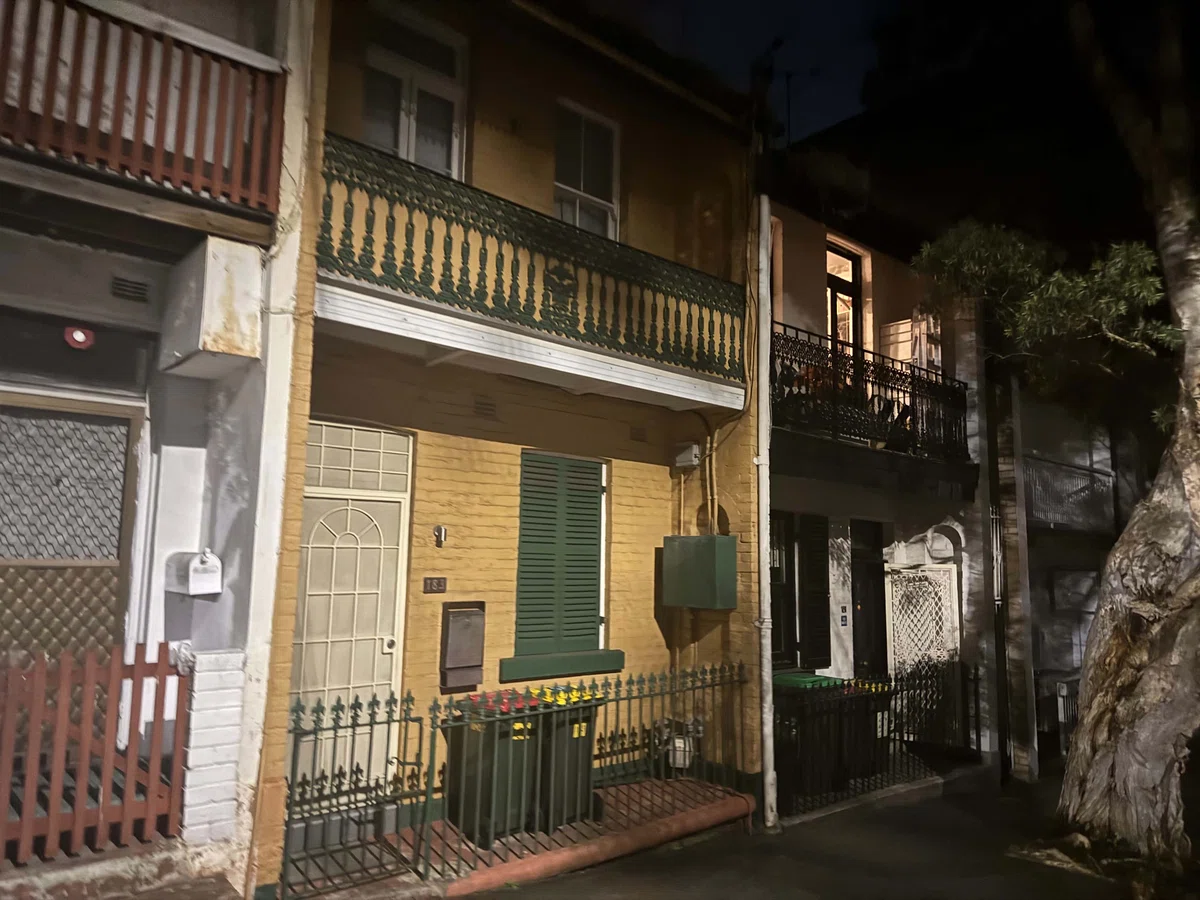
The secret of row houses (terrace houses/townhouses)
The ‘row houses with connected walls’ that I often saw in Australian cityscapes were common in Japan in the past, and there are still many row houses in Kyoto today.
At first glance, they didn’t look like those in a developed country, but there is also a view that they are a housing style born from advanced urban planning and history.
・Historical terrace houses: Inheriting the 19th-century British Victorian style.
With beautiful iron lace (iron decorations), they are high-class assets traded for hundreds of millions of yen in city centers.
・Missing Middle housing policy: An advanced urban planning approach to prevent the unlimited expansion of cities (urban sprawl) caused by detached houses and to increase infrastructure efficiency.
・Sales/Rights: Registered as Strata Title (condominium) or Torrens Title (fully independent land ownership), allowing for complete freedom to sell on a unit-by-unit basis.
However, it does not mean it ‘always goes up’
I will write this fairly. On November 3, 2026, the Reserve Bank of Australia (RBA) raised its policy interest rate target from 4.60% to 4.85%. In its statement, it noted that in some places, housing prices have fallen significantly and transactions have decreased.
In other words, the ‘structure that pushes up prices in the long term’ and the ‘short-term price movements driven by interest rates’ are different things. Even if the country is growing, the results will vary depending on when and where you buy, and how you withdraw your money. This is exactly the same for real estate in Japan.
Polarization by area (rapid rise vs. stagnation)
Australia is a vast continent about 20 times the size of Japan. Trends vary significantly by area.
[Rapidly rising areas]
・Perth (WA): The highest growth rate in Australia due to the mining boom, population inflow, and a sense of being relatively inexpensive compared to other states.
・Brisbane/Gold Coast (QLD): Rapid growth due to infrastructure investment for the 2032 Brisbane Olympics and an increase in migrants from colder southern cities.
Adelaide (SA): Secured stable demand due to low cost of living and affordability.
[Stagnant/slow-growth areas]
・Melbourne (VIC): Price growth has slowed (with some declines) due to past oversupply and tax increases for investors (land tax hikes) by the state government.
– Sydney (NSW): As a result of prices rising too high, the affordability constraint of the general public has been reached, causing transactions to slow down.
There is a ‘prescribed form’ for how foreigners are wanted
Australia is attracting foreign capital, but it does not mean everything can be bought. The federal government has temporarily banned the purchase of existing homes by foreigners from April 1, 2025, to March 31, 2027 (whether this will continue afterward is to be decided by a review). The design is to have money invested in the direction of increasing new housing, rather than having foreigners buy existing homes.
Furthermore, each state has a surcharge on stamp duty (tax at the time of real estate acquisition) when foreigners buy residential land.
-
New South Wales (Sydney): 9% of property price
-
Victoria (Melbourne): 8% of property price (contracts on or after July 1, 2019)
In short, Australia has designed a path where the national and state governments each say, ‘Foreign money is welcome, provided it is in a form that helps housing supply and you pay the additional tax.’
Maintenance costs and mechanisms for strata apartments
In Australian strata apartments, management fees and repair reserve funds called ‘Strata Levies’ are incurred. These are usually paid every three months (quarterly).
– Admin Fund: Equivalent to Japan’s ‘management fee’ (cleaning, building insurance, common area utility costs, etc.)
– Capital Works Fund: Equivalent to Japan’s ‘repair reserve fund’ (for future large-scale repairs)
Annual cost estimate: 4,000 AUD to 10,000 AUD+ (approx. 400,000 to over 1 million yen)
Caution: If a sudden repair occurs while the reserve fund is insufficient, there is a risk that a ‘Special Levy’ will be required as a lump-sum additional payment of tens of thousands of dollars, separate from the regular management fees.
The reality of ‘loans and financing’ when Japanese people purchase
When a Japanese resident in Japan purchases Australian real estate, there are strict hurdles that are completely different from those for local residents (Australians).
– Properties that can be purchased: New/uncompleted properties (Off-the-plan) only (purchase of existing homes is prohibited)
– Prior approval: FIRB (Foreign Investment Review Board) approval and high application fees are required
– Loan-to-Value Ratio (LVR): Maximum 50% to 60% (a down payment of 40-50% of the property price is required)
– Loan interest rate: Around 7.0% to 8.5% per annum (*when using a local Australian non-bank)
– Foreigner additional tax: A foreign stamp duty surcharge of 7% to 9% is incurred
Calculation for purchasing a 100 million yen property
Property price: 100 million yen
Down payment (50%): 50 million yen
Initial purchase costs (FIRB + stamp duty surcharge, etc.): Approximately 10 to 12 million yen (approx. 10-12%)
[Conclusion] Cash required at the time of purchase = Approximately 50 to 62 million yen (50-62% of the price)
*If you purchase a property with a ‘net yield of 2%’ using a local loan with an ‘interest rate of 7.5%’, you will enter an inverted yield state, resulting in an annual out-of-pocket loss (deficit) of approximately 2.2 million yen (over 180,000 yen per month).
The ‘persona’ of foreign investors who buy anyway and how to secure winning financing
What kind of people are the investors who purchase even under these high-hurdle, high-interest conditions?
Buyer persona (High-net-worth zone)
Attributes: High-income earners (doctors, executives, entrepreneurs, etc.) with net financial assets of 150 to 300 million yen or more / annual income of 30 to 50 million yen or more
Objective: Expectation of price appreciation (even if income is negative, if it rises 10-17% annually, it pays off in the end)
– ‘Asset preservation in Australian dollars’ to prepare for the yen’s depreciation and inflation risks in their home country (Japan)
– ‘Financing schemes’ of foreign winners
Almost no winners use local non-bank high-interest loans at 7.5-8.5% as they are.
– All-cash (full cash purchase): Eliminate interest burdens and aim for capital gains from inflation.
– Collateral financing in their home country: Use Japanese company buildings or homes as collateral to borrow in yen from Japanese banks at low interest rates (1.5-2.5%) and send the funds.
– PB (Private Bank) utilization: Use held securities, etc., as collateral to procure Australian dollars at a low spread.
Strict regulations on short-term resale (flipping)
The Australian government has implemented thorough regulations against short-term resale, which involves ‘buying and quickly selling at a higher price’.
– Restrictions on resale targets: Since properties purchased and completed by foreigners are treated as ‘used’, buyers are limited to local Australian residents (high-priced resale between foreigners is impossible).
・No CGT (Capital Gains Tax) concessions: Non-resident foreigners are not eligible for the ‘50% tax discount for holdings over 1 year’ and are taxed up to approximately 45% on their profits.
・FrCGW (Foreign Resident Capital Gains Withholding): 15% of the total sale price is automatically withheld by the Australian Taxation Office (ATO) at the time of sale, which puts pressure on cash flow.
・Occurrence of double stamp duty: There is a mechanism where double stamp duty is applied to the resale of rights before completion (Nomination).
Because of this, Australia can be called a market that ‘assumes long-term holding of 5 to 10 years or more’.
Japan seems to choose ‘collecting widely from the public’
Looking at the figures for Japan, the composition becomes clear. According to the Bank of Japan’s Flow of Funds Accounts (preliminary report published on September 17, 2026), household financial assets at the end of June 2026 were 2,519 trillion yen, an increase of 11.0% from the previous year. Of this, cash and deposits account for 1,132 trillion yen (44.9%).
It is often said that ‘wealthy people are leaving Japan because taxes are high.’ However, since there is so much wealth within the country, it is more cost-effective to collect it widely from the public, even if some wealthy people leave. To me, it seems that Japan’s tax system is structured based on that judgment.
There are also preparations for those who leave. For example, the ‘Exit Tax’ that began in July 2015. When a person who has held securities, etc., worth 100 million yen or more and has lived in Japan for more than 5 years out of the previous 10 years in principle moves overseas, they are deemed to have sold them and are taxed on the unrealized gains.
Countries with growing populations attract capital from outside, while countries that already have assets collect widely from within. Depending on population dynamics, age composition, and the state of national savings, countries create the most efficient way to collect taxes. That was the biggest lesson this time.
How business owners and asset holders should read the direction of their country’s tax system
What I think is important, before looking at individual tax rates, is to read ‘who this country is designed to tax, on what, and how.’ Applying the perspective learned in Australia to Japan results in the following:
-
Population and age composition: In a country with a shrinking population and advancing aging, I see that ‘held assets’ are more likely to be subject to taxation than those who earn income.
-
Asset placement: The more household assets are concentrated domestically, the more efficient the design of ‘broad and thin’ taxation and ‘taxation upon departure’ becomes.
-
Transfer overseas: Migration and overseas assets must also be considered in terms of both Japanese taxation (such as the exit tax) and the other country’s regulations (purchase restrictions and additional taxes).
-
Currency: Holding assets only in yen requires the awareness that you are essentially betting everything on the value of the yen.
I believe that the success or failure of overseas real estate is determined more by ‘how you withdraw money to buy’ and ‘how you are taxed at the exit’ than by ‘which country’s properties will rise.’ I also learned that for foreigners, Australia is a market based on long-term holding rather than short-term resale. This is on the exact same axis as thinking about ‘how to secure financing’ and ‘the exit’ first in Japan.
The trap of Australia’s ‘inheritance tax’ and Japan’s tax system
Australia has neither an ‘Inheritance Tax’ nor a ‘Gift Tax’ (0 yen).
The idea that ‘it is fine to let foreigners buy Japanese real estate because inheritance tax can be collected in the future’ is a mistake.
Japanese real estate valuations (roadside land prices) are valued significantly lower than market prices. Therefore, for a condominium unit worth several tens of millions to 100 million yen, the valuation often falls within Japan’s basic deduction limit (36 million yen or more), and in reality, there are many cases where not a single yen of inheritance tax enters the Japanese government’s coffers. Furthermore, if it is held in the name of an overseas corporation, no inheritance occurs at all.
This ‘hollowing out of the system’ is a major reason why discussions on restricting foreign purchases are intensifying within Japan.
Why can’t Japan restrict foreign real estate acquisitions like Australia does? (GATT/WTO, Foreign Exchange Act)
While Australia and Canada have implemented additional taxes on foreigners and bans on the purchase of existing homes, Japan cannot impose such restrictions for the following reasons.
・Reciprocity and International Treaties (GATT/WTO): Agreements such as the WTO and EPA/FTA include rules stating that ‘nationals and foreigners must not be discriminated against (national treatment).’ Countries like Australia reserved exceptions for their ‘right to regulate foreigners’ when signing these treaties, but Japan has a history of not having made such reservations.
・The ‘Principle of Freedom’ in the Foreign Exchange Act: Based on the post-war policy of ‘promoting inward investment and an open economy,’ the Foreign Exchange Act treats foreign investment as free in principle, with the exception of national security concerns.
The start of the ‘Important Land Use Survey Act’: Against this backdrop, Japan has now begun implementing the ‘Important Land Use Survey Act,’ which investigates the nationality and intended use of land owners around Self-Defense Force bases and border islands (monitored areas and special monitored areas) to regulate activities that hinder defense functions.
Judgment criteria learned from this stay
-
Before looking at tax rates, read from the structure of population and assets ‘who the country is designed to collect from’
-
Look at long-term structures (population/supply) separately from short-term price movements driven by interest rates
-
For overseas properties, verify foreign purchase restrictions and surcharges using official information at the time before purchasing
-
Before buying, decide on how to withdraw funds and the taxation on the exit (for both countries)
-
Follow revisions to Japan’s tax system not as ‘individual tax hikes’ but as ‘the direction of the design,’ and periodically review how you hold your assets
A checklist summarizing the judgment criteria from this article on one page will be sent to you if you send ‘Australia’ via our official LINE account.
Summary
The background to the long-term rise in Australian real estate includes population growth, difficulty in building, and systems that protect landlords. Furthermore, taxes and regulations are designed to attract foreign capital in a way that the country desires.
Japan is a country with 2,519 trillion yen in household financial assets. Reading where the country’s tax system is heading based on the direction of its design—I believe that is the first step toward protecting your assets.
Also, since the Australian market shows confirmed expectations for price increases, I thought that investing with a target of capital gains for five years or more is definitely a viable option.
However, because interest rates are extremely high, it is suitable for those who can invest aiming only for capital gains without expecting income gains.
Also, since prices for standard condominiums near Sydney are around 500 million to 1 billion yen, I felt it might only be feasible for those with significant assets.
Furthermore, during this stay, I was able to connect with Japanese real estate agents operating in Australia. If you are interested in Australian real estate, please consult with us via LINE.
If you found this article helpful, please click the Like button! (It encourages me to update the articles.)
For consultations tailored to your individual situation or to sign up for study sessions, please visit our official LINE account.
▶ Register for the official LINE (tap here)
This article is for informational purposes only and does not recommend the purchase of specific properties, countries, or products, including overseas real estate. As tax systems and regulations in each country are subject to change, the figures are current as of the time of writing. Please make investment decisions at your own risk and consult with professionals such as tax accountants or lawyers for tax and legal judgments.

Source
-
Australian Bureau of Statistics (ABS) “Australia’s population grows 1.4% in March 2026” (September 17, 2026) https://www.abs.gov.au/media-centre/media-releases/australias-population-grows-14-march-2026
-
Reserve Bank of Australia (RBA) “Statement by the Monetary Policy Board: Monetary Policy Decision” (November 3, 2026) https://www.rba.gov.au/media-releases/2026/mr-26-30.html
-
Australian Treasury Minister’s Announcement (Temporary ban on foreign purchase of existing homes, February 16, 2025) https://ministers.treasury.gov.au/ministers/clare-oneil-2024/media-releases/albanese-government-clamping-down-foreign-purchase
-
Revenue NSW “What is surcharge purchaser duty” https://www.revenue.nsw.gov.au/taxes-duties-levies-royalties/transfer-duty/surcharge-purchaser-duty/what-is-surcharge-purchaser-duty
-
State Revenue Office of Victoria “Foreign purchaser additional duty (current rates)” https://www.sro.vic.gov.au/about-us/rates-and-statistics/current-rates/foreign-purchaser-additional-duty-current-rates
-
Bank of Japan “Flow of Funds Accounts for the Second Quarter of 2026 (Preliminary)” Reference Charts (September 17, 2026) https://www.boj.or.jp/statistics/sj/sjexp.pdf
-
National Tax Agency “No. 1478 Special Provisions for Capital Gains, etc. when Moving Overseas” https://www.nta.go.jp/taxes/shiraberu/taxanswer/shotoku/1478.htm
-
NSW Government Fair Trading “Changes to rental laws” https://www.nsw.gov.au/departments-and-agencies/fair-trading/news/changes-to-rental-laws
-
IEAA “Australian Government Announces 2027 National Planning Level” https://ieaa.org.au/IEAA/News/2026/Australian-Government-Announces-2027-National-Planning-Level.aspx