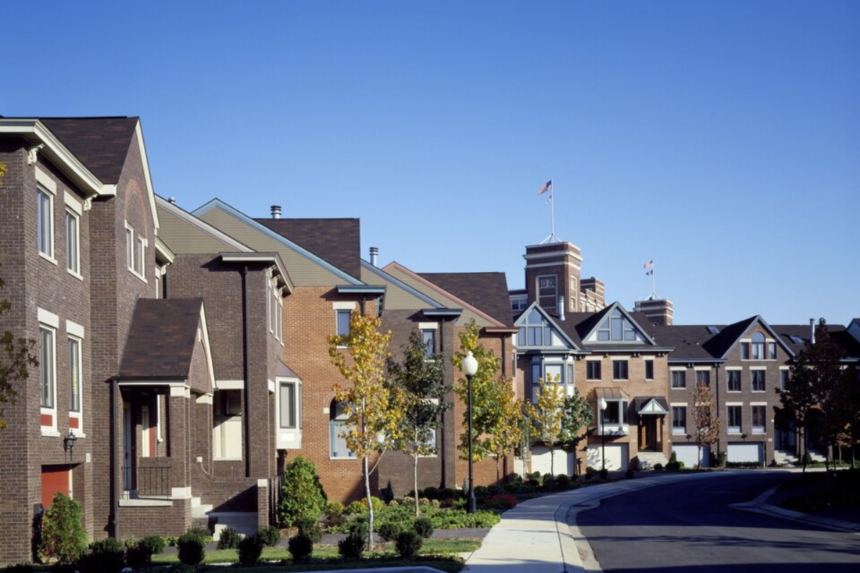
Mortgage rates have reached 7.28%, but buyers looking at new-build homes may have an increasingly valuable bargaining chip: builders are offering incentives to keep sales moving as borrowing costs climb.
The average 30-year fixed mortgage rate rose from 7.03% to 7.28% in the week ending 1 October, its sixth consecutive weekly increase and the highest level since November 2023. The jump was also the biggest one-week increase in almost four years, according to Freddie Mac.
For buyers, the important shift is not simply that mortgages are more expensive. Builders are increasingly willing to absorb part of the financing burden through rate buydowns, closing-cost assistance and other incentives, potentially changing the economics of buying a newly built home.
Builders Are Paying More to Win Buyers
The National Association of Home Builders said 66% of builders reported using sales incentives in September, up from 63% in August and the highest proportion since December. The share cutting home prices reached 38%, with the average reduction at 6%.
That creates an opportunity for buyers to negotiate beyond the advertised purchase price. A builder-funded mortgage rate buydown can reduce a borrower’s interest rate, either temporarily or for the life of the loan, depending on the arrangement. Closing-cost contributions can also reduce the amount of cash a buyer needs upfront.
The key is to compare the entire package rather than focusing only on the headline mortgage rate. A lower rate may come with different fees, restrictions, or costs that affect the overall value of the deal.
New-Home Supply Gives Buyers More Leverage
Builders have greater reason to offer concessions when homes take longer to sell. US Census Bureau and Department of Housing and Urban Development data showed 483,000 new homes were for sale in August, equivalent to 8.5 months of supply at the prevailing sales rate. The median new-home price was $393,700 (£298,000), down 5.8% from a year earlier.
That does not mean every buyer will be able to demand a discount. Local conditions vary considerably, and popular developments can still have stronger demand. But the combination of elevated mortgage rates and substantial new-home inventory gives some purchasers more room to ask whether a builder can contribute towards financing costs instead of simply reducing the sticker price.
Lower Rates Can Come With Higher Risk
Buyers who cannot secure a builder concession have other options, but a lower interest rate can involve a trade-off. Adjustable-rate mortgages, or ARMs, accounted for 10.3% of mortgage applications in the latest Mortgage Bankers Association data cited in the report, with rates around 80 basis points below fixed-rate loans.
The attraction is an initially lower rate. The risk is that the rate can reset after the introductory period, potentially increasing monthly payments if market rates are higher.
A 15-year mortgage can also offer a lower rate than a 30-year loan, but borrowers face substantially higher monthly payments. Assumable government-backed mortgages may provide another route for eligible buyers, although they can require significant cash to cover the difference between the seller’s remaining loan balance and the home’s purchase price. The lower rate, therefore, is not necessarily the cheapest overall option.
Shopping Around Can Reduce Borrowing Costs
Buyers do not have to accept the first mortgage offer they receive. The Consumer Financial Protection Bureau recommends contacting at least three lenders and comparing interest rates, annual percentage rates, fees, and monthly payments. It also says multiple mortgage credit checks within a 45-day period are recorded as a single inquiry on a credit report.
That makes shopping around particularly important when rates are moving sharply. For buyers considering a new-build home, the strongest negotiating position may come from combining lender comparisons with a direct discussion with the builder. The question is not simply whether a mortgage is below 7%, but whether the rate, fees, builder incentive, and long-term repayment risk together produce a better deal.