I write this as a taxpayer who believes government has a solemn responsibility to be a good steward of public assets. My purpose is not to criticize any individual purchaser or business. Rather, it is to ask whether the City of Trenton is enforcing the agreements it enters into on behalf of its taxpayers.
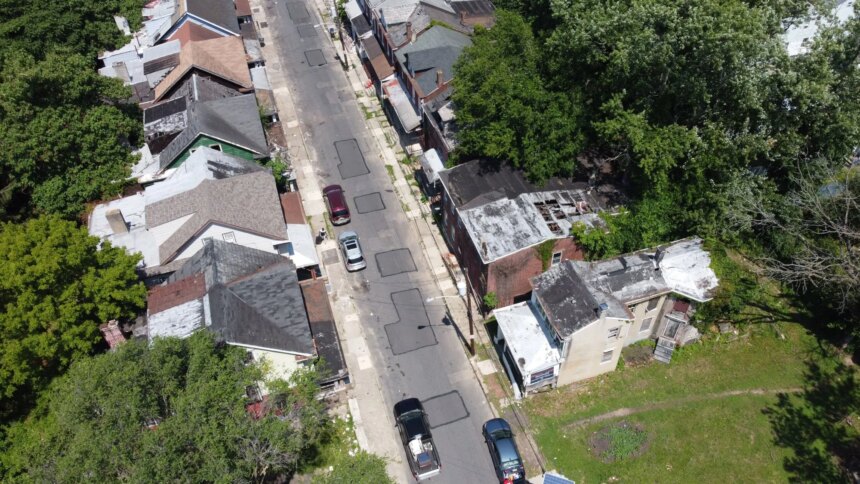
Recently, a City-owned property became the subject of discussion on social media. According to publicly available property records, the property was purchased from the City for approximately $1,000 and is now being marketed for approximately $250,000. The property’s exterior also appears to show little evidence of substantial rehabilitation.
Whether that particular purchaser complied with the terms of the agreement is a question only the administration can answer. But the discussion raises a much larger issue that should concern every resident.
After obtaining the City’s contract governing the sale of another City-owned property, I found something both encouraging and troubling.
Encouraging because the City clearly understands how public property should be managed.
Troubling because the public has little visibility into whether these agreements are consistently enforced.
The contract requires purchasers to begin repairs and rehabilitation within 90 calendar days of closing and to complete the rehabilitation within 12 months. It further provides that a purchaser’s failure to repair, rehabilitate, and maintain the property constitutes an event of default.
More importantly, the contract establishes meaningful consequences.
If a purchaser defaults during the first three years after closing, the City is authorized to seek reversion of the property, require title to be transferred back to the City for one dollar, and retain one hundred percent of the original purchase price as liquidated damages.
These are not suggestions.
They are contractual obligations.
They exist because public property should produce public value, not simply private opportunity.
The City has also demonstrated that it is willing to enforce its contracts. In another matter, the City rescinded the sale of a City-owned property after the purchaser failed to close within the required timeframe and retained the purchaser’s deposit.
That raises an obvious question.
If the City enforces its contracts when a purchaser fails to close, does it enforce those same contracts when a purchaser fails to rehabilitate a property as required?
That is not an accusation.
It is an accountability question.
Accordingly, I respectfully ask the administration to provide the following information:
- How many City-owned properties have been sold through the City’s auction and property disposition programs during the past ten years?
- How many purchasers began rehabilitation within the required 90-day period?
- How many completed rehabilitation within the required 12 months?
- How many purchasers were determined to be in default?
- How many notices of default have been issued?
- How many properties has the City sought to reclaim through its contractual reversion provisions?
- How many purchasers have been declared ineligible to purchase additional City-owned property because they failed to comply with prior agreements?
- Will the administration publish an annual performance report demonstrating whether the City’s property disposition program is reducing blight, strengthening neighborhoods, and expanding the tax base?
These are not political questions.
They are management questions.
Throughout my career in strategic planning, process improvement, and organizational leadership, I have learned that successful organizations do not measure activity, they measure outcomes.
Selling a property is an activity.
Restoring a neighborhood is an outcome.
Likewise, drafting a contract is an activity.
Enforcing that contract is accountability.
The value of a government policy is not found in the words written on paper. It is found in the discipline to enforce those words consistently, fairly, and without exception.
Government should not be judged by the number of resolutions it passes, contracts it signs, or properties it sells. It should be judged by whether those actions produce measurable improvements for the people it serves.
Public property belongs to the people.
Public trust requires accountability.
And accountability without enforcement is merely an illusion.
If the City is consistently enforcing these contractual obligations, the administration should proudly share the data. If it is not, then taxpayers deserve to know why. Transparency is not about assigning blame; it is about demonstrating that public assets are managed with the same discipline and accountability expected of every resident and every business.
Because in the end, the true test of accountability is not the promises government makes, it is the promises government keeps.