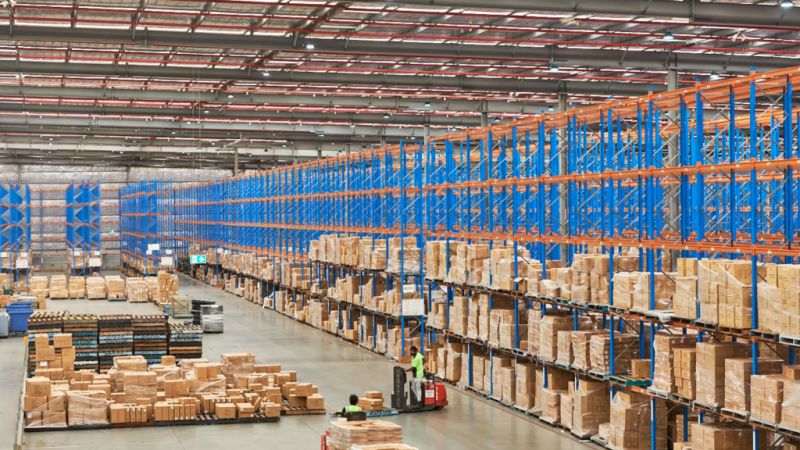
Mum and dad investors are turning to industrial assets as the federal budget changes to negative gearing begin to bite into residential investment returns.
Negative gearing changes push investors to commercial property
Industrial properties have caught the attention of many household investors looking for low-maintenance real estate with low vacancy and high yields, says Chris Huxter, commercial buyers agent at InvestorKit.
“I would say the level of inquiry into commercial property is well over 100 per cent even if you just compared the past couple of months,” he said.
“The majority, the big bulk of that inquiry, about 90 per cent, are mum and dad investors who are looking to get into a commercial property that’s about $1.5 million or below.
“It’s predominantly industrial because if you just Google ‘what should I invest in commercial property in Australia?’ you’ll see industrial pop up as the leading asset class. And when you go online or you listen to podcasts, it’s true – industrial property is the flavour of the last few years and it’s probably going to be the flavour for the next 10 years.”

Strong yields and low vacancy rates underpin industrial demand
Conditions across Australia’s industrial market are indeed strong.
Vacancy rates are decreasing nationally, with JLL research showing a slide from 5 per cent in the March quarter to 4.8 per cent in the June quarter. Perth is Australia’s tightest market at 2.2 per cent, followed by Adelaide at 3.8 per cent and Brisbane at 4.5 per cent.
Vacancy is slightly higher in Australia’s two largest markets – 5.8 per cent in Sydney across 23.5 million square metres and 4.9 per cent in Melbourne across 30.6 million square metres.
Yields within the prime market sat at 5.7 per cent, while secondary yields were at 6.35 per cent, according to Colliers data for the March quarter.
On top of that, industrial land supply is very constrained across Australia. National industrial supply slowed by 10 per cent in the March quarter compared to the March quarter in 2025. Just 337,000 square metres of industrial space was delivered in that 12-month period.

These solid statistics have steered investors towards industrial, but not entirely away from residential, says Jared Johnson, director at Gold Coast agency Coastal Commercial.
“A lot of the interest is from mum-and-dad investors who like the fundamentals of industrial property – relatively low maintenance, longer leases and strong tenant demand – but who may not have the appetite or capital for larger commercial assets,” he says.
“I wouldn’t say they’re necessarily turning away from residential altogether, but we are seeing some investors broaden their thinking. Softer yields are prompting investors to consider whether industrial property can provide a better balance of income, growth potential and simplicity.”
Due diligence remains critical for first-time commercial buyers
Lenders typically have stricter, higher deposit requirements for commercial property loans based on the property’s cash flow and rental income, and repayment periods are often shorter than for residential property.
The financial risks involved in industrial investment differ significantly from those associated with residential. These could include costly outgoings, such as structural damage (e.g., leaking roofs), upgrades to heating, ventilation, and cooling systems, and compliance with environmental standards.

The other risk to mitigate is vacancy, which could be more prominent in certain sub-sectors of the industrial market.
“There is higher risk associated with any sort of commercial investment,” says Vanessa Rader, head of research at Ray White Group.
“So, all it takes is for your property to be vacant for a year and then you’re very much in the negative.”
Before buying a property, Huxter says investors should consider organising risk assessments by qualified tradespeople and drilling down into details of the local market.
“So, if a mum-and-dad investor had $500,000 and if they were keen on buying industrial property, I would look at the vacancy rate of the area,” he said.
“If you can’t figure out the vacancy rate, just jump online to see what is for lease that is a similar size and what you would do is you would jump on the sold section, and you’d look at the suburb that you’re looking into. You’ll see what things are selling for at what size, then you would jump on the for lease section and then see how many of those assets are actually for lease.
“If there’s under five assets that are similar size for lease, then it’s probably a good buy. There’s obviously good opportunities in the market, but just do your research and make sure that you’re well aware of the risks that are involved. Not every industrial property is a good one.”