Sterling recovers lost ground and UK borrowing costs slip back on a rollercoaster day in which Sir Keir Starmer quit as PM and Andy Burnham confirmed his bid to replace him

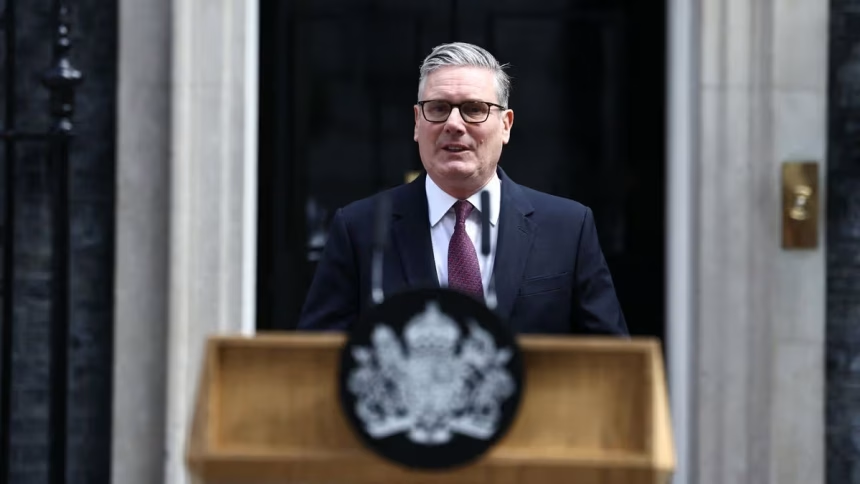
Keir Starmer making his resignation speech(Image: AFP via Getty Images)
The pound has recovered earlier losses and sky high government borrowing costs eased amid the political fall-out from Keir Starmer’s resignation.
On another day of drama in Westminster, the reaction from the City was more muted – for now at least – as investors weighed up the likelihood of Andy Burnham replacing Sir Keir as PM.
Sterling was up 0.05% at $1.324 in morning trading, having been around 0.3% lower shortly before the departing Prime Minister’s speech. It was meanwhile up 0.07% at 1.154 against the euro. The pound has already lost around 3% since February as Sir Keir’s leadership has come under increasing threat from Labour party challengers.
Meanwhile, the yield – or rate – on 10 year government gilts edged up to 4.85% in the immediate aftermath of Sir Keir’s emotional Downing Street speech, but then fell to 4.81% after former health secretary Wes Streeting backed Mr Burnham to succeed the PM. Mr Streeting’s move reduced the likelihood of a protracted leadership contest. The longer term 30 year gilt yield was also broadly stable.
As well as determining government borrowing costs, gilts also influence the cost of of fixed rate mortgages. When the yields on UK government bonds rise, banks’ wholesale funding and hedging costs also increase. A stark example occurred after failed short-term Tory leader Liz Truss’s mini Budget in September 2022, when gilt yields jumped and millions of mortgage borrowers paid the price, with mortgage rate peaking at nearly 7% the following summer. Average two and five year mortgage rates come down a lot since then.
But there was a muted reaction on the stock market, with the FTSE 100 down only slightly. Investors have largely been pricing in the possibility of Sir Keir stepping down, given events in recent weeks and months.
It came as Sir Keir set out a timetable for his departure, paving the way for Mr Burnham to become Britain’s seventh leader since the Brexit vote a decade ago.
The main focus in the coming days, weeks and months will be the bond market due to the UK’s already punishingly high borrowing costs and the scale of the national debt.
Chris Beauchamp, chief market analyst at online trading platform IG, said: “It has been coming for months, but today might finally see Starmer give up the ghost on his less than stellar premiership.
“For markets, the question is what will really change. Does Burnham, who already has form on flip-flopping, have the strength of will to chart a more dynamic course than the drift exhibited by Starmer’s period in office? Something big is needed to arrest the slide towards Reform, but markets are not likely to be happy with some kind of free-spending approach given the UK’s dire financial state.”
Analyst Jim Reid or Deutsche Bank said it was notable that the PM’s possible resignation was happening on the eve of the 10 year anniversary of the Brexit vote, “something the UK still hasn’t come to terms with. Since then, the UK has revolved through six Prime Ministers which, alongside Brexit, underlines the immense difficulties many incumbents have in the Western World today.
“Everyone arrives in the post with great hopes but then the lack of growth and financial realities hit. Until you have stronger economic growth and less constrained by debt it’s likely the conveyor belt of PMs will continue.”
The stock market reaction is relatively benign given the FTSE 100 is up more than 4% since the start of the year and 17% higher year-on-year.
Sterling slipped as much as 0.4% overnight against the US dollar to $1.32. It walso dropped against the euro.
“The most important question relates to Mr Burnham’s approach to fiscal policy, his pick of Chancellor and whether he will stick to the fiscal rules,” Nomura economist George Buckley said.