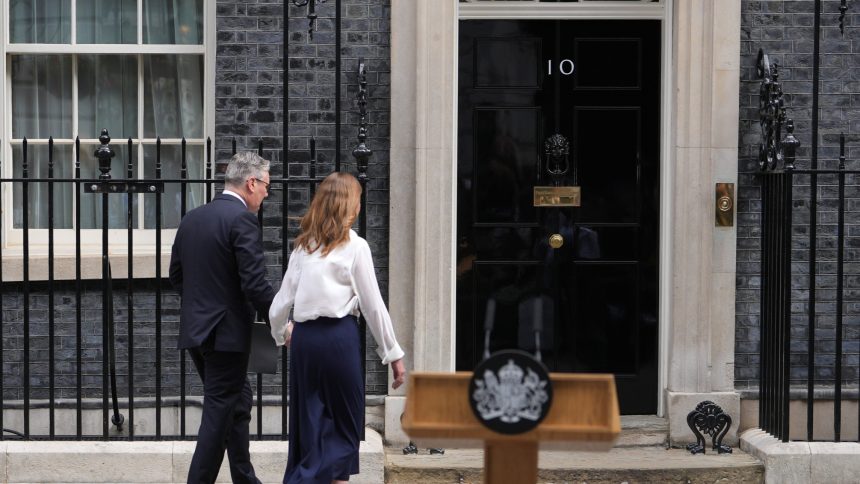
Keir Starmer’s resignation as Prime Minister may lead to mortgage costs reducing as a “degree of political uncertainty” is injected into financial markets, Lansdown Financial Service director, Doug Miller, has suggested.
Following Starmer’s resignation, which was announced this morning (June 22), Miller stated that, in the short term, swap rates could become more volatile as markets reassess the outlook for fiscal policy, government borrowing, and the timing of future base rate cuts.
“That said, any sustained increase in mortgage costs would depend on whether the political change materially alters expectations for inflation, public finances, or interest rates,” he continued.
“If markets view the transition as orderly and policy continuity is maintained, the impact on borrowing costs may prove limited.”
Miller added that this added another degree of uncertainty in an already volatile market but, with many banks announcing multiple interest rate reductions in recent weeks, the outlook “is certainly not all doom and gloom at the moment”.
But Trinity Financial product and communications director, Aaron Strutt, said that he expected mortgage price reductions, which have emerged in recent weeks, to slow down following Starmer’s departure.
“Sterling has remained relatively strong against the Euro over the past few months despite the challenge to his leadership, but there are now serious risks to sterling exchange rates.
“Mortgage rates have been coming down for weeks, but these price reductions could slow down. There are no guarantees that a new Prime Minister will do a better job.”
EHF Mortgages’ managing director, Justin Moy, said that whoever Burnham chooses as his chancellor would be pivotal when it came to assessing the longer-term impact on the mortgage market and housing policy.
“The uncertainty over the next few months may result in fluctuating mortgage rates and markets generally, until the new tenants of Downing Street set their direction,” he said.
“Confidence will lower rates and drive homebuying, otherwise we will be in a political mess once again.”
HNWs
Meanwhile, Payne Hicks Beach partner Phineas Hirsch discussed what a Burnham premiership might mean for high net worth individuals, suggesting that he might “double down” on a fairness-first, regionally redistributive tax agenda.
He explained that a new Burnham government would not seek radically new taxes overnight, but rather would engage in a stronger push for closing reliefs and tightening wealth taxation.

I suspect we are likely to see continued pressure to raise revenue from wealth rather than income
“I suspect we are likely to see continued pressure to raise revenue from wealth rather than income, meaning HNWIs should prepare for renewed scrutiny on capital gains, inheritance tax reliefs, and potentially the introduction of a wealth tax,” Hirsch stated.
“Burnham is somewhat of an unknown quantity at this level of government, but a continued drive for ‘fairness’ risks coming at the cost of economic growth.”
He concluded by stating it would be good if the political change could be taken as an opportunity to reassess what is working and what is not in terms of the government’s stated desire to stimulate growth and inbound investment.
Pensions
Finally, Isio partner, Stewart Hastie discussed what the resignation could mean for the pensions industry, cautioning that it could derail ongoing pension reform.
“The key priority should be ensuring that progress on existing reforms is not lost as the industry needs continuity to ensure the important work already under way is delivered successfully,” he said.
“There will now be questions over whether any change in leadership could affect future policy decisions, including pensions tax relief, how the Government plans to address the long-term cost of the State Pension, the future of the triple lock, and its response to the State Pension Age Review.
Hastie added that pensions policy requires “long-term thinking and consistency”, and that pension schemes, employers and savers need confidence that reforms will be seen through and that decisions are being made with long-term retirement outcomes in mind.
tom.dunstan@ft.com
What’s your view?
Have your say in the comments section below or email us: ftadviser.newsdesk@ft.com