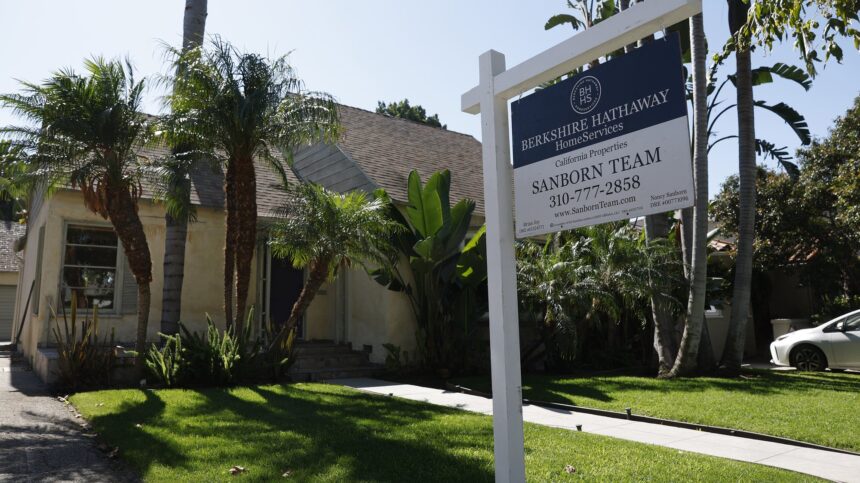
The latest news on mortgage rates — crucial to the housing market, to would-be buyers and sellers — is not great. According to Freddie Mac, the average interest on a 30-year fixed-rate mortgage edged up again last week, to 6.66%. That puts the cost of borrowing to buy a home at the highest level we’ve seen in a year.
One year ago, the 30-year mortgage was just above 6.5% — almost exactly where it is today — and a lot of economists were confident rates were headed down.
“You know, I also expected mortgage rates to come down, so I guess I would have to take the stand that it was reasonable,” said Chen Zhao, head of economics research at Redfin.
She was right for a while. By February, the rate had dipped below 6% as the job market weakened, inflation fell, and it seemed likely the Fed would begin cutting rates to stimulate growth.
But then the Iran war disrupted global oil supplies. “And that was a shock that sort of came out of left field,” Zhao said.
Oil prices and inflation soared, and, paradoxically, the U.S. economy came out of its slow-growth funk.
“The labor market has really turned around,” she said. “The AI boom is actually providing a lot of resilience, but it’s also providing inflationary pressure.”
That pressure is driving investors to demand higher interest on long-term debt, like mortgages. For the housing market, stronger economic growth is a double-edged sword, per Douglas Porter, chief economist at the Bank of Montreal.
“It can help employment. It can help the potential homebuyer have a little bit more confidence in making that plunge,” he said. “But of course, it does put upward pressure on interest rates.”
And that can make homes less affordable, driving some buyers out of the market.